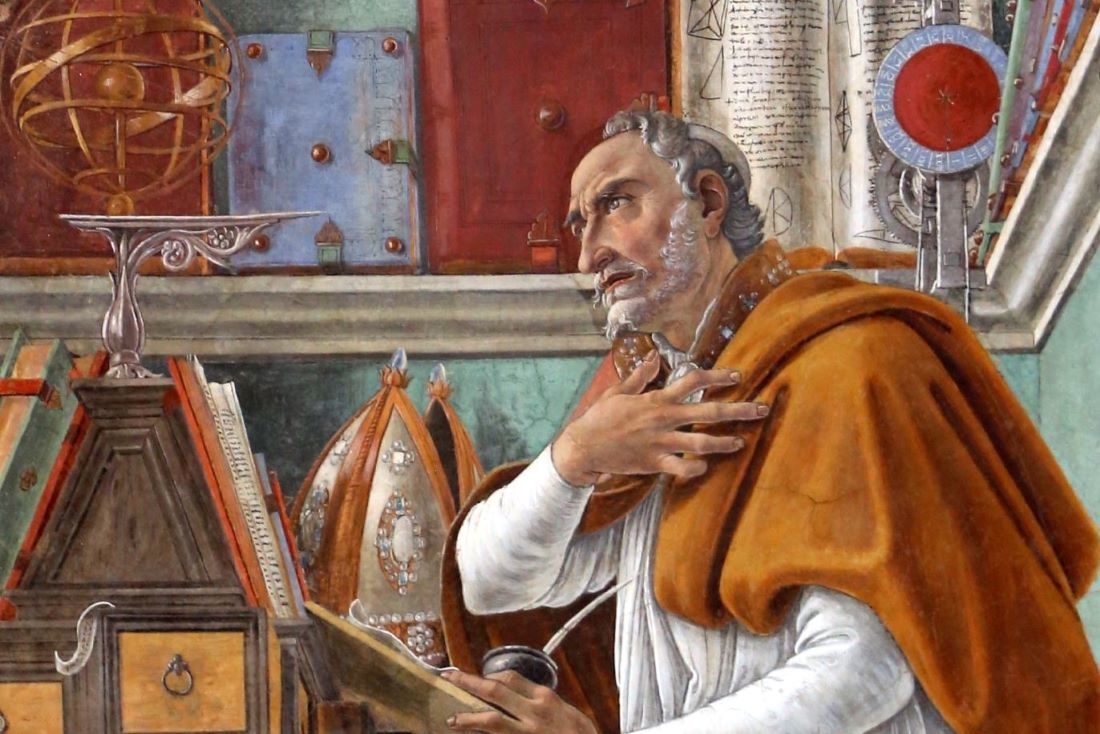
Augustine’s Encouragement to American Christians in Election Season: “The City of God” and its Modern Application

As we find ourselves in the midst of another election season, it’s easy to feel overwhelmed (and frustrated) by the flood of discussions, debates, and news cycles. How can we lift our eyes above the waters and find guidance and encouragement? As I have in past election seasons, I am reflecting once again on Augustine’s book, The City of God.

Even though it was written nearly sixteen centuries ago, I believe his profound work still speaks to us today. It explains the realities of the worlds, or the “cities,” in which we live, and offers wisdom on how to navigate the waters of our political landscape with faith and hope. Let me show you how!

Who Was Augustine?

Augustine of Hippo was an early Christian theologian and philosopher. He was born in 354 AD in what is now Algeria and became one of the most influential figures in Christianity. He was, in a sense, one of the first great theologians of the church. It is said that all theological traditions, in some way or another, are indebted to Augustine. He is the fountainhead from which many streams of theology flow. His writings, especially Confessions and The City of God, have shaped Christian thought for centuries.

What Is “The City of God” About?

Augustine wrote The City of God in response to the fall of Rome in 410 AD. For the first time in centuries, Rome was not the superpower of the world, and many people blamed Christians for the collapse of the city, claiming that abandoning the old Roman gods had led to Rome’s downfall. Augustine wrote City of God to defend Christianity and to offer a broader perspective on history and society.

In his book, Augustine contrasts the “city of man” with the “city of God.” Both cities are marked by love. The city of man is characterized by self-love and pride, which leads to conflict and corruption. The city of God, on the other hand, is marked by the love of God and the building of His kingdom. Augustine encourages Christians to live in the city of man as citizens of the city of God until the day that God’s city triumphs. But how do we do that? Here are six ways.

Continue reading “Augustine’s Encouragement to American Christians in Election Season: “The City of God” and its Modern Application” →

Why Disciple-Making Must Begin with the Gospel

Today we launched a new discipleship group on my back porch at 6:45am. In our first meeting together, we carefully explained and studied the core message of the gospel. We began with God and His character, considered man’s need because of his sin, Christ’s righteous life, sacrificial death, and victorious resurrection, and the need for responding in repentance and faith. We discussed our individual experiences hearing, believing, and living the gospel. Though it may seem basic, starting any disciple-making effort must start with the gospel. Here’s why:

1. The gospel is the entry-point into life with God.

A disciple is someone who is following Jesus. Someone who is walking with God. The gospel is the message that brings us to God. The content of the gospel- Christ’s life, death, and resurrection- is the power of God to save (Romans 1:16). By believing it, we become sons and daughters of God, and begin a new life with God. We must start disciple-making with the gospel because it is quite literally the starting point of our lives with God.

2. The gospel is the foundation of walking with God.

Not only is the gospel the starting point of life with God, it is also the foundation of the believer’s future walk with God. We never outgrow our need for the gospel. Every day we are sinners in need of God’s grace. Every day we are recipients of God’s grace in Christ. Every day God sees us, not in our sin, but in the perfect righteousness of the Son.

Continue reading “Why Disciple-Making Must Begin with the Gospel” →

Disciple-Making as an Essential Spiritual Discipline

Bible-reading. Prayer. Worship. Evangelism. Serving. Giving. Fasting. All of these “spiritual disciplines” are explained and encouraged in most books on the subject. And rightly so! Each one of them is listed in the books that I am currently using to prepare a life group study on practicing the disciplines. But as I went through the lists, I noticed that something was missing: disciple making.

Disciple making is the intentional process of helping other people follow Jesus through relationships. It has not traditionally been regarded as a spiritual discipline, but I think it should. Spiritual disciplines act as scaffolding in the construction of a believer’s relationship with God. They are the habits and patterns of life that all believers should practice in obedience to God’s commands, including His command to make disciples (Matt 28:18-20).

I believe disciple making deserves formal recognition as an essential spiritual discipline right alongside prayer, Bible-intake, giving, fasting praying, etc. Here’s why:

1. Disciple making is obedience to Jesus.

At its core, disciple making is an act of obedience. Jesus’s command to make disciples is not a suggestion but a directive. In John 14:15, Jesus says, “If you love me, keep my commands.” Engaging in disciple making not only demonstrates our willingness to align our lives with Christ’s instructions but is a way of actually loving Him.

2. Disciple making cultivates spiritual growth.

Making disciples is not merely about teaching others; it’s a dynamic process that fosters mutual growth. As we help others follow Jesus, we deepen our relationship with Him as well. Part of this is because you must “walk the walk” before you can model that walk to others (more on accountability below).

In its simplest form, disciple making promotes biblical fellowship, which always edifies both parties. Proverbs 27:17 states, “As iron sharpens iron, so one person sharpens another.” Both mentor and mentee, group leader and members, are sharpened by each other. One of my favorite aspects of leading the discipleship ministry at our church is hearing from the leaders how much they are growing!

Continue reading “Disciple-Making as an Essential Spiritual Discipline” →

Children & Church

What if our children saw church,
not as a place where their parents went out of mundane routine, but a place where they delighted to go?

What if our children saw church as the place where their parents expected to meet with God, worship Him, and learn to walk with Him?

What if our children saw church as the place where their parents looked for opportunities to speak to, encourage, and pray for other members?

What if our children saw church as the place where their parents cheerfully gave their money, time, and resources to the mission of God?

What if our children saw the church as the place where their parents were constantly inviting their friends, family, and even strangers to go?

What if our children saw the church as the place where their parents were refreshed and invigorated for the week ahead?

What if our children saw the church as the place that their parents valued so highly that almost nothing came in the way of their attending?

How might all of this affect the child’s, and future adult’s, view of church?
The next generation is watching us, parents! By the grace of God, may we demonstrate through our attitudes and actions the incredible value, beauty, and privilege of being a part of God’s church

How God Builds, Sustains, and Strengthens His Church (1 Corinthians 1:1-9)

Church life is messy. There are no perfect churches because they are no perfect people. The church at Corinth demonstrated the possibility of imperfection better than any other church in the New Testament. Their disarrayed congregation fell prey to the cult of personality (1:10-17), sexual immorality (5:1-13; 6:12-20), confusion about marriage (7:1-40), misuse of Christian liberty (8:1-11:1), dishonorable practices surrounding the Lord’s Supper (11:17-34), unhealthy practices concerning spiritual gifts (chs 12-14), and incorrect views on the resurrection (ch. 15).[1] A mess indeed.

Nevertheless, they remained God’s church. And the beginning of Paul’s letter to them tells us just how God builds, strengthens, and sustains His church, despite the mess they may create. He helps us clean up our mess by re-directing our attention to His work and to the ways that He builds, strengthens, and sustains His people.

1. God calls leaders to shepherd His people (1 Cor. 1:1).

1Paul, called by the will of God to be an apostle of Christ Jesus, and our brother Sosthenes (1:1)

God does not desire for His church to function as an anarchic democracy. He raises up leaders to shepherd His people. Paul identifies Himself as one of these leaders in the opening verse of the chapter-as an “apostle” who was “called” to His assignment according to “God’s will.” It is the same with all church leaders- God appoints shepherds to lead His flock. “Pay careful attention to yourselves and to all the flock, in which the Holy Spirit has made you overseers,[2] to care for the church of God, which he obtained with his own blood” (Acts 20:28). The church should pray for, support, and follow the leadership of her shepherds, as they follow the Chief Shepherd.

2. God saves sinners and sanctifies saints (1:2-3).

2To the church of God that is in Corinth, to those sanctified in Christ Jesus, called to be saints together with all those who in every place call upon the name of our Lord Jesus Christ, both their Lord and ours: 3 Grace to you and peace from God our Father and the Lord Jesus Christ” (1:2-3).

God’s church is the place where sinners become sanctified saints. It is where the gospel is preached, where sin is repented of, and where Christ is believed (i.e. “called upon”). Those in Christ are sanctified- a word that is in the perfect tense in Greek, emphasizing the resultant state. In other words, members of Christ’s church have been made holy in Christ, and are currently holy in Him. As such, the Scriptures call us saints.

Continue reading “How God Builds, Sustains, and Strengthens His Church (1 Corinthians 1:1-9)” →
Do All Children Go to Heaven? 7 Reasons (from the Bible) I Am Confident They Do

On Friday, April 5th at 2:26pm, my three year old nephew, Zade, entered Jesus’ presence. Though I may never know why it happened, I am confident where he is, because I believe the Bible clearly answers the question of where children and infants go when their time on earth is finished. Here are seven reasons why I believe all “little ones” go straight to heaven when they pass:

1. Children are described as belonging to God.

In the book of Ezekiel, God condemns the Israelites for offering up their children as sacrifices to foreign gods. Interestingly enough, God doesn’t call the Israelite’s children their children, but His children(see Ezekiel 16:21). God views little ones as his own possession and will take them to be with himself when their time is complete. They are His children, after all.

2. Children are viewed and treated as innocent by God.

God refers to young children as innocents in Jeremiah 19:4 (ESV). Children obviously inherit a sinful nature from Adam (no one has to teach a two year old to be selfish), so they aren’t totally innocent of sin. But they are innocent in their inability to understand their sin as rebellion against God and their subsequent need for a Savior to reconcile them to God.

Consider Deuteronomy 1:39, where God tells the Israelites who did not trust Him that they will not enter the promised land. Notice what He says about their children, “And the little ones that you said would be taken captive, your children who do not yet know good from bad- they will enter the land.” The children who “do not yet know good from bad” were not punished alongside their parents. They were allowed entrance into the promised land because God in His grace viewed them as innocent. I believe the same applies to the promised land in heaven!

3. Children are recipients of God’s protective compassion.

In Matthew 18, Jesus encourages his followers to avoid despising the “little ones.” In other words, they are not to be forgotten. The disciples were not to be so focused on their future ministry that they saw children as unimportant. Jesus even describes the little ones as having their own angels (v. 10) and states that it is the Father’s will that none of them should perish (v. 14). God’s desire is that we would follow Him in remembering and protecting children. It’s hard to imagine that He would remove His compassion and stop protecting them when their life on earth is done. On the contrary, He welcomes them into an even greater experience of His love and care for them in heaven.

Continue reading “Do All Children Go to Heaven? 7 Reasons (from the Bible) I Am Confident They Do” →

The Most Important Aspect of Leadership

What is the most important aspect of leadership? Character. God values character over every other facet of leadership. When He lists the qualifications for the leaders of His people in 1 Timothy 3:1-7, all except one are character-based. Only one is performance based- “able to teach.” So if we want to be effective leaders who bring God glory, we must pursue character. But what is character? What kind of character do we need to have? How do we pursue it? And what do we do when we fail in our pursuit of it? We discuss all of these questions and more in the recording below from our Adult Bible Study at Glen Haven.

The Preeminent King Who Reconciles All Things

Our focus as a church this week was on the preeminence of Christ. Preeminence refers to the exclusive right of being first, supreme, or surpassing all others. The Son of God in the person of Christ is preeminent (Colossians 1:18). He is before all things (1:16) because He created all things (1:15-16) and holds all things together (1:17b).

Christ is also preeminent over the church (1:18). The church is made up of those whom Christ created; they are part of the “all things” He created in 1:16, who rebelled against Him (1:21) but have been reconciled back to Him (1:22). But how did this reconciliation occur? By the preeminent One “making peace through the blood of His cross” (1:20).

The beauty of the gospel captured my heart this Sunday. Colossians 1 presents the Son as the One who created all things and currently holds all things together. But it also presents Him as the One who reconciles all things by His own death. Only the One who created all things can reconcile all things back to Himself- and there was only one way for Him to do that- “by the blood of His cross” (1:20).

Here is the prominent reminder for us: everything that we need, from the greatest need of salvation to the smallest need of our next breath: Christ provides. He created all things. He sustains all things. He reconciles all things. By the blood of His cross.

How to Build Your Life on Christ

Too often I walk away from corporate worship without giving thought to what God has taught me and how I should apply it. Yes, even pastors can be guilty of going through the motions. I am not disengaged; I will note an interesting point in a sermon, re-listen to a worship song, or pray for someone that I had a conversation with, but rarely do I give sustained thought and prayer to what God has taught me and what He wants me to do with it.

Therefore, I am starting a new blog series on Monday mornings where I will think and write about what God taught me on Sunday. Lessons may come from messages, songs, conversations, or Scripture readings. Not only will this give me an avenue to think, pray, and write, I hope it will also encourage you to think and pray through what God taught you as well!

This Sunday, we considered Matthew 7:24-27 and Jesus’ instruction to build our house on the rock. “House” is a metaphor for our lives and the “rock” is a metaphor for Christ. We can build our lives on Christ, the rock, or on the shifting sands of the world. Storms will come and beat against our houses, but only those whose house is built on the rock will stand.

But what does it mean to build our life on the rock that is Jesus? Two things. First, to build our life on Jesus means to have Him as the foundation of our life with God. We must recognize that there is no foundation other than Him that can reconcile us to God and keep us in intimate relationship with Him. Nothing and no one other than Christ can deal with our sin debt or provide us with the perfect righteousness that we need to stand before God.

Continue reading “How to Build Your Life on Christ” →

Grace for the Humble- 1 Peter 5:5-11

Once again, I have been tasked with teaching on a passage and topic that I have neither mastered nor have begun to gain proficiency in: humility. Some of you may have just breathed a sigh of relief. You’re already pretty humble- so you think- and so you’re poised for a nice pat on the back! But once you think you have humility, you’ve lost it. So I am here to help you regain it. For others, you may have groaned, because you struggle with pride, and now find yourself blessed to sit through a sermon on humility.

Most are somewhere in between, wondering what in the world I am about to say, but here’s what I can promise you: we all have something to learn today. Not because of what I say but because of what God says. We all have the opportunity to sit before God’s Word and to hear Him speak to us about a virtue that is absolutely necessary for His people.

So what is humility? It is an attitude of mind that realizes that we have no reason to be distinct, special, or important in God’s eyes. It is the recognition that without God, we are nothing. Even in comparison to others, in the grand scheme of things, we are all the same- creatures that are completely dependent upon God for life, breath, andevery good thing.

1 Peter 5:5 commands us to put on humility, “Likewise, you who are younger, be subject to the elders. Clothe yourselves, all of you, with humility toward one another, for ‘God opposes the proud but gives grace to the humble’.” After exhorting the elders in verses 1-4, Peter encourages the entire church, “all of you,” to clothe themselves with humility. Why? Because God opposes the proud but gives grace to the humble.

Thus we see the necessity of our subject this morning. God opposes those without it. The word oppose conveys the imagery of being set in battle array. God opposes the proud as if He is a battling army. Thus we are commanded to clothe ourselves with humility, a rare verb that refers to a slave putting on an apron before serving, as Jesus did before washing the disciples’ feet.

So, what do you want this morning? Do you want God to oppose you? To set His face and His power against you? Or do you want God to be gracious towards you? What determines whether we receive God’s opposition or His grace in our lives? Humility.

Continue reading “Grace for the Humble- 1 Peter 5:5-11” →