The Triune God: The Ultimate Christmas Gift

Christmas is here! And all that comes with it: lights, decorations, gatherings, and…gifts. What does that last word do for you- gifts? Does it create excitement, perhaps over the gift you might receive or give? Or does it create a sense of burden over the gifts you need to purchase? Whichever it may be, how would you feel if I told you that our practice of gift-giving could (and should) deepen our appreciation of the Triune God?

Why do we give gifts at Christmas, anyways? We may say, “because God has given us the gift of salvation.” And while that may be true, the gift God has given us is much more than that. The ultimate Christmas gift is a Trinitarian gift. It’s a gift prepared, given, and protected by the Father, the Son, and the Holy Spirit. It is a gift that redeems the world and restores all that mankind lost in the Garden of Eden, chiefly, an intimate relationship with the Triune God.

When God gives us the gift of salvation, He gives us Himself and the ability to know Him. That’s what we lost in Eden. Everything else is merely a symptom of that broken relationship. So God prepares, purchases, and extends this gift to us. But He does so through each member of the Trinity giving themselves so that we may know God in all of His fullness. Let me explain.

Continue reading “The Triune God: The Ultimate Christmas Gift”
Why You Should Read a Children’s Bible

Our culture is fascinated with unconventional methods to reach common goals, especially when they work! Well, here’s my hot take of an unconventional method to assist Christians in attaining the common goal of biblical literacy. Read a good children’s Bible, whether you have kids or not! These books have been one of the most unexpected tools that God has used to increase my knowledge of His Word. They’ve given me the ability to understand the over-arching story of the Bible better. They have also equipped me to share that story with kids and adults!

I love to teach where Old Testament stories or passages fit in the redemptive storyline of the Bible or how they point us to Christ. Take the story of David and Goliath, for example. I may say something like, “this story points to Jesus because Jesus is the better David, who goes on our behalf to fight the giants of sin and death and when He wins, His victory is attributed to us, even though we didn’t lift a finger.”

Or I may consider how David’s victory over Goliath was an essential part of his path to becoming king and receiving a promise from God that one of his descendant’s would rule on his throne forever, a promise that was fulfilled when one of David’s descendants was crucified, resurrected, and sat down at the right hand of the Father to reign forever.

How can we see connections like this? One of the best places is a good children’s Bible. They excel at giving you the gist of a passage and showing you how it fits into the larger story of the Bible. They can provide excellent summaries, application, and food for thought. I love reading them with my kids, but I also enjoy reading them for my own personal benefit.

Here are a few of the ones I recommend:

  1. The Jesus Storybook Bible by Sally Lloyd-Jones
  2. The Biggest Story Bible Storybook by Kevin DeYoung (we are currently reading this with our oldest sons right now and using the memory cards for scripture memorization)
  3. The Beginners Gospel Story Bible by Jared Kennedy

Remember, with a lot of these you are not reading direct translation of God’s Word. You are reading distilled and simplified passages that are meant to show the reader what the passage means in the grand scheme of God’s revealed truth. Don’t replace regular Bible reading with one of these, use them in addition to your regular reading. I hope that you’ll find, as I have, that such a tool is invaluable, and a worthy addition to any child or adult’s library!

*Header photo by Crossway featuring Deyoung’s The Biggest Story Bible Storybook

Psalm 98- Why and How We Should Sing Praise

Today we are going to take a look at Psalm 98 together. This psalm helps us with something that we do every week: sing worship to God. But Psalm 98 has much broader implications than just singing. Though its only nine verses, it encompasses the entire Bible from Genesis to Revelation and encourages us to celebrate that story through songs of praise.

Singing praise is central to the Christian life. We sing praise every week as the gathered body of Christ. But do we know why we sing praise? Do we know how to sing praise? Do we know how to make praise a part of our everyday life? Let’s remember, it is to the holy God of the universe that we are called to render this praise; we should not take such an endeavor lightly!

Thankfully, we have Psalm 98 to guide our way. The big idea of the psalm is this: we should praise God in the present by remembering what He has done in the past and looking forward to what He will do in the future. Let’s consider the components of this idea in turn.

Continue reading “Psalm 98- Why and How We Should Sing Praise”

Augustine’s Encouragement to American Christians in Election Season: “The City of God” and its Modern Application

As we find ourselves in the midst of another election season, it’s easy to feel overwhelmed (and frustrated) by the flood of discussions, debates, and news cycles. How can we lift our eyes above the waters and find guidance and encouragement? As I have in past election seasons, I am reflecting once again on Augustine’s book, The City of God.

Even though it was written nearly sixteen centuries ago, I believe his profound work still speaks to us today. It explains the realities of the worlds, or the “cities,” in which we live, and offers wisdom on how to navigate the waters of our political landscape with faith and hope. Let me show you how!

Who Was Augustine?

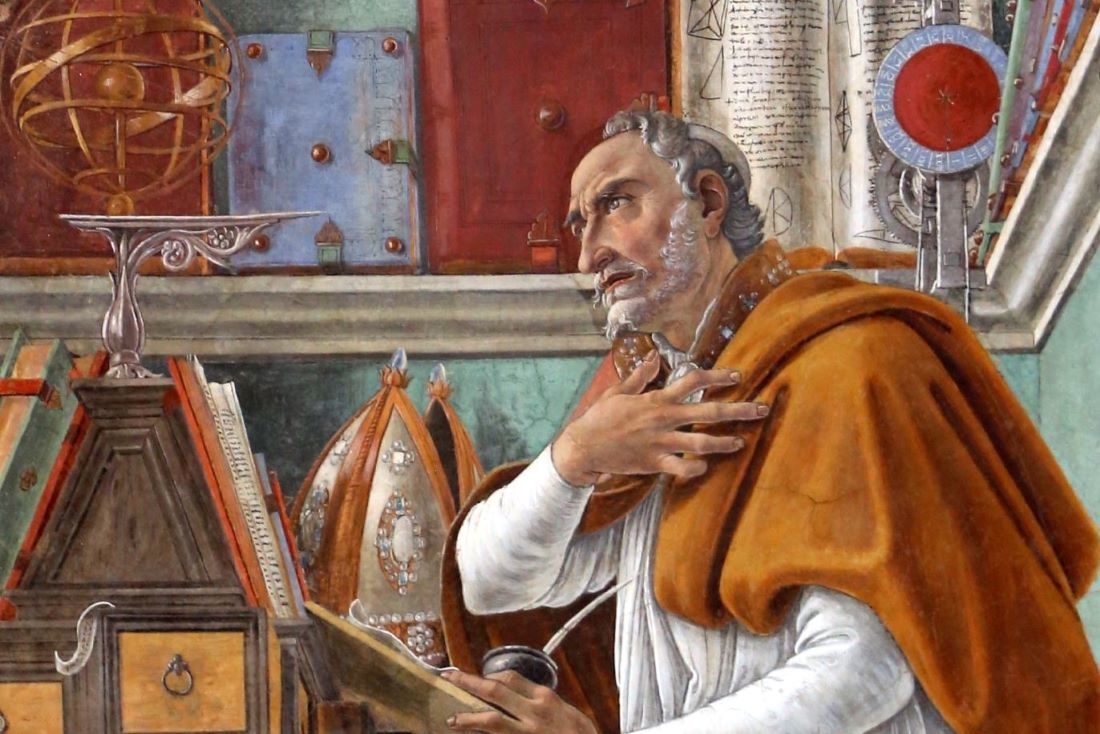
Augustine of Hippo was an early Christian theologian and philosopher. He was born in 354 AD in what is now Algeria and became one of the most influential figures in Christianity. He was, in a sense, one of the first great theologians of the church. It is said that all theological traditions, in some way or another, are indebted to Augustine. He is the fountainhead from which many streams of theology flow. His writings, especially Confessions and The City of God, have shaped Christian thought for centuries.

What Is “The City of God” About?

Augustine wrote The City of God in response to the fall of Rome in 410 AD. For the first time in centuries, Rome was not the superpower of the world, and many people blamed Christians for the collapse of the city, claiming that abandoning the old Roman gods had led to Rome’s downfall. Augustine wrote City of God to defend Christianity and to offer a broader perspective on history and society.

In his book, Augustine contrasts the “city of man” with the “city of God.” Both cities are marked by love. The city of man is characterized by self-love and pride, which leads to conflict and corruption. The city of God, on the other hand, is marked by the love of God and the building of His kingdom. Augustine encourages Christians to live in the city of man as citizens of the city of God until the day that God’s city triumphs. But how do we do that? Here are six ways.

Continue reading “Augustine’s Encouragement to American Christians in Election Season: “The City of God” and its Modern Application”

Why Disciple-Making Must Begin with the Gospel

Today we launched a new discipleship group on my back porch at 6:45am. In our first meeting together, we carefully explained and studied the core message of the gospel. We began with God and His character, considered man’s need because of his sin, Christ’s righteous life, sacrificial death, and victorious resurrection, and the need for responding in repentance and faith. We discussed our individual experiences hearing, believing, and living the gospel. Though it may seem basic, starting any disciple-making effort must start with the gospel. Here’s why:

1. The gospel is the entry-point into life with God.

A disciple is someone who is following Jesus. Someone who is walking with God. The gospel is the message that brings us to God. The content of the gospel- Christ’s life, death, and resurrection- is the power of God to save (Romans 1:16). By believing it, we become sons and daughters of God, and begin a new life with God. We must start disciple-making with the gospel because it is quite literally the starting point of our lives with God.

2. The gospel is the foundation of walking with God.

Not only is the gospel the starting point of life with God, it is also the foundation of the believer’s future walk with God. We never outgrow our need for the gospel. Every day we are sinners in need of God’s grace. Every day we are recipients of God’s grace in Christ. Every day God sees us, not in our sin, but in the perfect righteousness of the Son.

Continue reading “Why Disciple-Making Must Begin with the Gospel”

How God Builds, Sustains, and Strengthens His Church (1 Corinthians 1:1-9)

Church life is messy. There are no perfect churches because they are no perfect people. The church at Corinth demonstrated the possibility of imperfection better than any other church in the New Testament. Their disarrayed congregation fell prey to the cult of personality (1:10-17), sexual immorality (5:1-13; 6:12-20), confusion about marriage (7:1-40), misuse of Christian liberty (8:1-11:1), dishonorable practices surrounding the Lord’s Supper (11:17-34), unhealthy practices concerning spiritual gifts (chs 12-14), and incorrect views on the resurrection (ch. 15).[1] A mess indeed.

Nevertheless, they remained God’s church. And the beginning of Paul’s letter to them tells us just how God builds, strengthens, and sustains His church, despite the mess they may create. He helps us clean up our mess by re-directing our attention to His work and to the ways that He builds, strengthens, and sustains His people.

1. God calls leaders to shepherd His people (1 Cor. 1:1).

1Paul, called by the will of God to be an apostle of Christ Jesus, and our brother Sosthenes (1:1)

God does not desire for His church to function as an anarchic democracy. He raises up leaders to shepherd His people. Paul identifies Himself as one of these leaders in the opening verse of the chapter-as an “apostle” who was “called” to His assignment according to “God’s will.” It is the same with all church leaders- God appoints shepherds to lead His flock. “Pay careful attention to yourselves and to all the flock, in which the Holy Spirit has made you overseers,[2] to care for the church of God, which he obtained with his own blood” (Acts 20:28). The church should pray for, support, and follow the leadership of her shepherds, as they follow the Chief Shepherd.

2. God saves sinners and sanctifies saints (1:2-3).

2To the church of God that is in Corinth, to those sanctified in Christ Jesus, called to be saints together with all those who in every place call upon the name of our Lord Jesus Christ, both their Lord and ours: Grace to you and peace from God our Father and the Lord Jesus Christ” (1:2-3).

God’s church is the place where sinners become sanctified saints. It is where the gospel is preached, where sin is repented of, and where Christ is believed (i.e. “called upon”). Those in Christ are sanctified- a word that is in the perfect tense in Greek, emphasizing the resultant state. In other words, members of Christ’s church have been made holy in Christ, and are currently holy in Him. As such, the Scriptures call us saints.

Continue reading “How God Builds, Sustains, and Strengthens His Church (1 Corinthians 1:1-9)”

The Preeminent King Who Reconciles All Things

Our focus as a church this week was on the preeminence of Christ. Preeminence refers to the exclusive right of being first, supreme, or surpassing all others. The Son of God in the person of Christ is preeminent (Colossians 1:18). He is before all things (1:16) because He created all things (1:15-16) and holds all things together (1:17b).

Christ is also preeminent over the church (1:18). The church is made up of those whom Christ created; they are part of the “all things” He created in 1:16, who rebelled against Him (1:21) but have been reconciled back to Him (1:22). But how did this reconciliation occur? By the preeminent One “making peace through the blood of His cross” (1:20).

The beauty of the gospel captured my heart this Sunday. Colossians 1 presents the Son as the One who created all things and currently holds all things together. But it also presents Him as the One who reconciles all things by His own death. Only the One who created all things can reconcile all things back to Himself- and there was only one way for Him to do that- “by the blood of His cross” (1:20).

Here is the prominent reminder for us: everything that we need, from the greatest need of salvation to the smallest need of our next breath: Christ provides. He created all things. He sustains all things. He reconciles all things. By the blood of His cross.

Grace for the Humble- 1 Peter 5:5-11

Once again, I have been tasked with teaching on a passage and topic that I have neither mastered nor have begun to gain proficiency in: humility. Some of you may have just breathed a sigh of relief. You’re already pretty humble- so you think- and so you’re poised for a nice pat on the back! But once you think you have humility, you’ve lost it. So I am here to help you regain it. For others, you may have groaned, because you struggle with pride, and now find yourself blessed to sit through a sermon on humility.

Most are somewhere in between, wondering what in the world I am about to say, but here’s what I can promise you: we all have something to learn today. Not because of what I say but because of what God says. We all have the opportunity to sit before God’s Word and to hear Him speak to us about a virtue that is absolutely necessary for His people.

So what is humility? It is an attitude of mind that realizes that we have no reason to be distinct, special, or important in God’s eyes. It is the recognition that without God, we are nothing. Even in comparison to others, in the grand scheme of things, we are all the same- creatures that are completely dependent upon God for life, breath, andevery good thing.

1 Peter 5:5 commands us to put on humility, “Likewise, you who are younger, be subject to the elders. Clothe yourselves, all of you, with humility toward one another, for ‘God opposes the proud but gives grace to the humble’.” After exhorting the elders in verses 1-4, Peter encourages the entire church, “all of you,” to clothe themselves with humility. Why? Because God opposes the proud but gives grace to the humble.

Thus we see the necessity of our subject this morning. God opposes those without it. The word oppose conveys the imagery of being set in battle array. God opposes the proud as if He is a battling army. Thus we are commanded to clothe ourselves with humility, a rare verb that refers to a slave putting on an apron before serving, as Jesus did before washing the disciples’ feet.

So, what do you want this morning? Do you want God to oppose you? To set His face and His power against you? Or do you want God to be gracious towards you? What determines whether we receive God’s opposition or His grace in our lives? Humility.

Continue reading “Grace for the Humble- 1 Peter 5:5-11”

Old Testament Wisdom for New Testament Believers (Proverbs 4:23-27)

“The beginning of wisdom is this: Get wisdom ” (Proverbs 4:7a). If you want to be wise, get wisdom. Pretty simple, isn’t it? The entire book of Proverbs is filled with wisdom. So get the book, there you go- wisdom! But if you’ve ever read the book of Proverbs, you know it doesn’t come that easily.

Proverbs is a part of the rich wisdom literature of the Old Testament. Such literature is not conducive to interpreting at face value and immediately applying it to our lives. We have to slow down and understand the individual proverbs in their original context. We have to read them through the lens of biblical theology, and then apply them to the current context of our lives as New Testament believers.

In this message I want to help us “get wisdom” by studying a passage of Proverbs in the ways I just mentioned. Our text will be Proverbs 4:20-27,

Continue reading “Old Testament Wisdom for New Testament Believers (Proverbs 4:23-27)”

Ten Reasons to Read God’s Word Regularly

Every follower of Jesus should cultivate the habit of regular Bible reading. Here are ten reasons why.

  1. God’s Word leads us to salvation.

In 2 Timothy 3:15-17, Paul tells Timothy to continue in the “sacred writings” that He has known from birth. Paul is referring to the Scriptures, which he describes as being “able to give wisdom that leads to salvation through faith which is in Christ Jesus.” The Scriptures lead us to Christ, in whom is our salvation. But the Scriptures also continually point us to Christ throughout our lives and remind us of the gospel. We need to be reminded of what God has done for us in Christ on a regular basis. That’s why Paul encourages Timothy to continue reading them- and why we should to!

Continue reading “Ten Reasons to Read God’s Word Regularly”