Recently, I’ve been reading books on the topic of Christianity and Artificial Intelligence. The intersection between the two is an interesting one. The pendulum swings from a coming apocalypse and a techno-golden age. Many times, wisdom is found in the middle. But in my experience with these books, there’s wisdom across the spectrum. Wisdom in convictional avoidance. Wisdom in enthusiastic adoption. And wisdom in trying to walk the tight rope between the two.
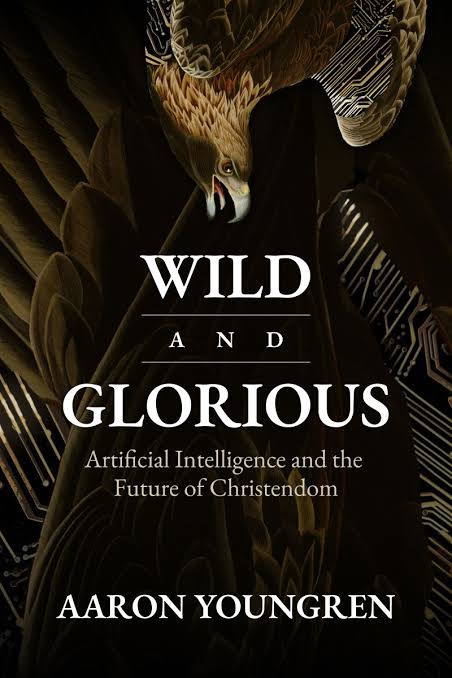
I just finished Aaron Youngren’s Wild and Glorious, and enjoyed the way all three views are represented therein (that is, avoidance, adoption, and balance). In fact, I think his thesis requires such representation. Youngren’s thesis is that man-made intelligences[1] are wild by design, and so a one-size-fits-all approach doesn’t work.[2]
By “wild” he means that though AI models may be trained to follow a predictable pattern of behavior, they may still do unpredictable things, like other forms of intelligence (i.e. animals, insects, etc.). A dog may act in the way it has been trained most of the time, but you still never know for certain. Youngren cites several examples from nature, concluding that such wildness is not a design flaw, but a feature, and then applies this principle to man-made intelligences. Their wildness he argues, “is a design feature, and this design feature is the key to understanding their proper use.”[3]
Because man-made intelligences are wild, there’s not a one-size fits all rule to govern their use. Wisdom is required. The only thing close to a generic rule Youngren proposes is the following: “Wild things require wise people. Intelligences are wild. Therefore we must become wise.”[4]
Continue reading “Conquering Artificial Intelligence: A Review of Aaron Youngren’s ‘Wild & Glorious’”
