Is Jesus Really God? A Biblical, Historical, and Theological Summary

Does the Bible present Jesus as God in the flesh? Is the Son of God really God? Or did the doctrine of Christ’s deity evolve over the centuries? Christianity rises and falls upon this doctrine just as much as any other. It is not an overstatement to say that salvation hangs in the balance. So, what’s the answer?

Dan Brown writes in his enormously popular book The Da Vinci Code that Jesus’ deity was a doctrine proposed and voted on at the Council of Nicaea in 325. He writes that the Roman emperor at the time, Constantine, “turned Jesus into a deity who existed beyond the scope of the human world, an entity whose power was unchallengeable.”[1] However, The Da Vinci Code is a work of fiction, and so is this claim. Fiction.

Not only is this claim historically inaccurate (the deity of Christ was not proposed/voted on at the council of Nicaea), it is biblically and theologically inaccurate. The Scriptures clearly present Jesus as God and our theology of salvation requires it. Yet countless cults and critics have bought into Brown’s claims or those like it, believing that the deity of Jesus is a historical development rather than biblical truth.

Biblical Evidence

I would like to pose three arguments that demonstrate that the Bible clearly expects us to believe that Jesus is God: 1. Jesus bears the names and titles of God. 2. Jesus does the works of God. 3. Jesus receives the worship of God.

1. Jesus bears the titles of God.

    Consider the following verses:

    “In the beginning was the Word, and the Word was with God, and the Word was God.” (John 1:1)

    “Thomas answered him [Jesus], ‘My Lord and my God!’” (John 20:28)

    Titus writes that we are “waiting for our blessed hope, the appearing of the glory of our great God and Savior Jesus Christ” (Titus 2:13). This verse features the Granville Sharpe Rule in Greek, where God and Savior refer to the same person, Jesus Christ. It is similar to how we might say “our father and friend David.” We would understand David to be both the father and friend referenced.

    There’s another one of these in 2 Peter 1:1- “To those who have obtained a faith of equal standing with ours by the righteousness of our God and Savior Jesus Christ.Peter clearly refers to Jesus as God and Savior.

    Paul writes, “To them belong the patriarchs, and from their race, according to the flesh, is the Christ, who is God over all, blessed forever. Amen.” (Romans 9:5)

    And he said to me, “It is done! I am the Alpha and the Omega, the beginning and the end.” (Revelation 21:6). Compare this to what Yahweh says about himself in Isaiah 44:6, “Thus says the Lord, the King of Israel and his Redemer, the Lord of hosts: I am the first and I am the last; besides me there is no god.”

    The New Testament authors clearly identify Jesus as God by using these titles in reference to him.

    Continue reading “Is Jesus Really God? A Biblical, Historical, and Theological Summary”

    Delighting In The Trinity (Book Review)

    The triunity of God is one of the most foundational doctrines of Christianity. And yet, the Trinity is one of the most neglected and least understood tenets of our faith. I’m afraid I have contributed to this myself. I have been guilty of speaking of the Trinity as if it was something too difficult to understand or too risky to talk about for fear of stepping into heresy.

    The problem with such neglect is the misinformed notions we develop about God as a result. Instead of understanding God to be Father, Son, and Spirit, who dwells in eternal unity and love, we fashion a singular god in our own image who often turns out to be cold, distant, and ultimately unknowable. Even if we don’t consciously believe God to be singular and distant, we often live as if he is, expecting his disapproval, ambivalence, and relative absence to characterize our lives rather than warm, enjoyable, loving fellowship with him. The antidote to this, Michael Reeves argues, is to know God as Trinity.

    To know the Trinity is “to know God, an eternal and personal God of infinite beauty, interest, and fascination. The Trinity is a God we can know, and forever grow to know better.”[1] The strength of Reeves’ book is that he writes about the Trinity from a relational perspective rather than an ontological one.[2] His goal is not to mine all the nuanced gems of the Trinity’s nature, but to show how God has revealed himself as Father, Son, and Spirit, and how he relates to us as such.

    Continue reading “Delighting In The Trinity (Book Review)”

    The Triune God: The Ultimate Christmas Gift

    Christmas is here! And all that comes with it: lights, decorations, gatherings, and…gifts. What does that last word do for you- gifts? Does it create excitement, perhaps over the gift you might receive or give? Or does it create a sense of burden over the gifts you need to purchase? Whichever it may be, how would you feel if I told you that our practice of gift-giving could (and should) deepen our appreciation of the Triune God?

    Why do we give gifts at Christmas, anyways? We may say, “because God has given us the gift of salvation.” And while that may be true, the gift God has given us is much more than that. The ultimate Christmas gift is a Trinitarian gift. It’s a gift prepared, given, and protected by the Father, the Son, and the Holy Spirit. It is a gift that redeems the world and restores all that mankind lost in the Garden of Eden, chiefly, an intimate relationship with the Triune God.

    When God gives us the gift of salvation, He gives us Himself and the ability to know Him. That’s what we lost in Eden. Everything else is merely a symptom of that broken relationship. So God prepares, purchases, and extends this gift to us. But He does so through each member of the Trinity giving themselves so that we may know God in all of His fullness. Let me explain.

    Continue reading “The Triune God: The Ultimate Christmas Gift”

    Augustine’s Encouragement to American Christians in Election Season: “The City of God” and its Modern Application

    As we find ourselves in the midst of another election season, it’s easy to feel overwhelmed (and frustrated) by the flood of discussions, debates, and news cycles. How can we lift our eyes above the waters and find guidance and encouragement? As I have in past election seasons, I am reflecting once again on Augustine’s book, The City of God.

    Even though it was written nearly sixteen centuries ago, I believe his profound work still speaks to us today. It explains the realities of the worlds, or the “cities,” in which we live, and offers wisdom on how to navigate the waters of our political landscape with faith and hope. Let me show you how!

    Who Was Augustine?

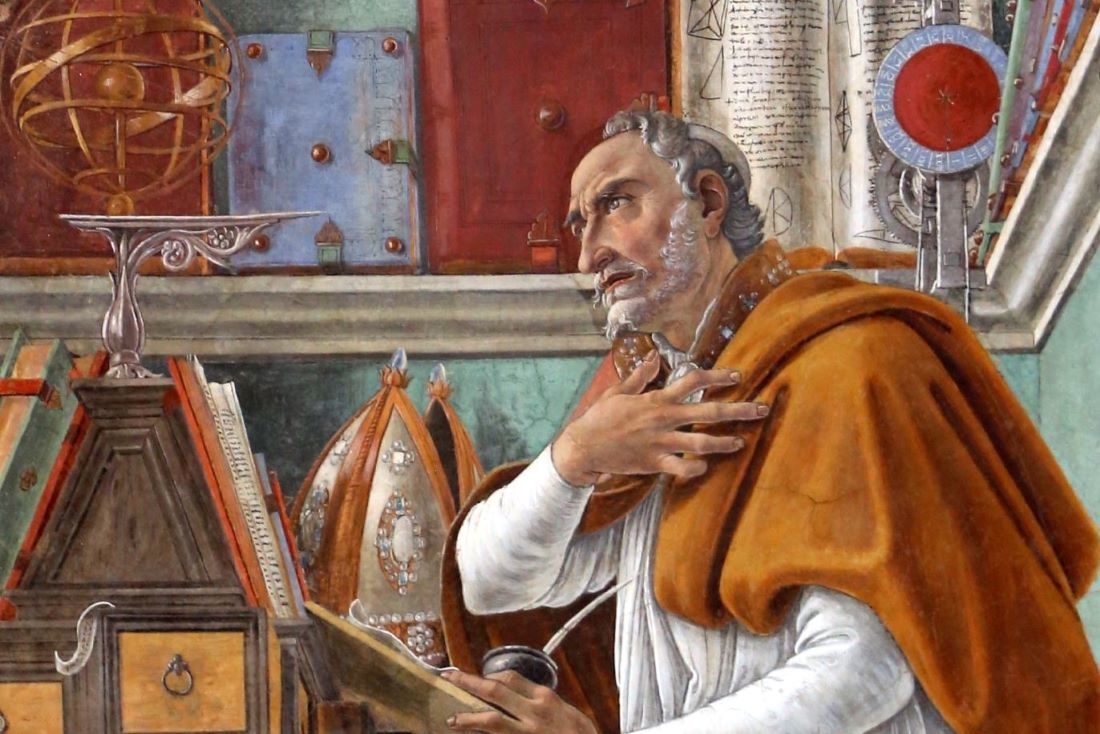
    Augustine of Hippo was an early Christian theologian and philosopher. He was born in 354 AD in what is now Algeria and became one of the most influential figures in Christianity. He was, in a sense, one of the first great theologians of the church. It is said that all theological traditions, in some way or another, are indebted to Augustine. He is the fountainhead from which many streams of theology flow. His writings, especially Confessions and The City of God, have shaped Christian thought for centuries.

    What Is “The City of God” About?

    Augustine wrote The City of God in response to the fall of Rome in 410 AD. For the first time in centuries, Rome was not the superpower of the world, and many people blamed Christians for the collapse of the city, claiming that abandoning the old Roman gods had led to Rome’s downfall. Augustine wrote City of God to defend Christianity and to offer a broader perspective on history and society.

    In his book, Augustine contrasts the “city of man” with the “city of God.” Both cities are marked by love. The city of man is characterized by self-love and pride, which leads to conflict and corruption. The city of God, on the other hand, is marked by the love of God and the building of His kingdom. Augustine encourages Christians to live in the city of man as citizens of the city of God until the day that God’s city triumphs. But how do we do that? Here are six ways.

    Continue reading “Augustine’s Encouragement to American Christians in Election Season: “The City of God” and its Modern Application”

    The Goodness of God

    I recently had the opportunity to speak on the goodness of God as a part of a series on God’s attributes. God’s goodness is an aspect of His character that we do not consider enough, even though we live in the presence of it every day. I thoroughly enjoyed studying for, writing, and delivering this message. As I considered all the biblical content regarding God and His goodness, I was able to “taste and see that the Lord is good” (Psalm 34:8). I hope that this message helps you taste and see His goodness as well.

    30 Names and Attributes of God

    Though God is infinitely above our finite ability to understand or comprehend, he has revealed himself to us in his Word. There are numerous attributes of God’s character expressed in the Bible. These attributes help us know what God is like so that we can have fellowship with him, worship him, and serve him rightly. We should study them, share them, sing about them, take comfort in them, and pray them.

    The below compilation of God’s attributes is from the campus ministry I was a part of in college, The Navigators. I believe it is one of the best tools for studying and praying the attributes of God. I am reproducing it here for ease of access for those I recommend it to. My suggestion is to take a different attribute each day, read the accompanying verses, and praise God for that attribute. May God bless you in your pursuit of him!

    1. JEHOVAH

    The name of the independent, self-complete being—“I AM WHO I AM”—only belongs to Jehovah God. Our proper response to Him is to fall down in fear and awe of the One who possesses all authority. Exodus 3:13-15

    2. JEHOVAH-M’KADDESH

    This name means “the God who sanctifies.” A God separate from all that is evil requires that the people who follow Him be cleansed from all evil Leviticus 20:7-8

    3. INFINITE

    God is beyond measurement—we cannot define Him by size or amount. He has no beginning, no end, and no limits. Romans 11:33

    4. OMNIPOTENT

    God is all-powerful. He spoke all things into being, and all things—every cell, every breath, every thought—are sustained by Him. Nothing is too difficult for Him. Jeremiah 32:17-18Jeremiah 32:26-27

    Continue reading “30 Names and Attributes of God”

    An Encouraging Day as a Discipleship Pastor

    In every profession, there are good days and bad days. Days that are more difficult and days that are easier. Too often, I’m afraid, we remember the bad days more than the good. We remember the slumps of the tough days more than the joys of the fruitful days. I’ve had many difficult days in ministry. But I’ve also had many exciting, fruitful days. Yesterday was one of those exciting days, and I want to revel in it for just a bit.

    Continue reading “An Encouraging Day as a Discipleship Pastor”

    J. Gresham Machen, A Biographical Essay

    Introduction

    Throughout the history of Christianity, certain theologies, ideologies, and philosophies have arisen and threatened the church’s understanding of the faith that was once for all delivered to the saints. One such theology is the modern liberalism that arose in the late 19th and early 20th centuries, which the main character of this essay describes as “an attempt to solve the problem of historic Christianity’s relation to modern culture.”[1] In an attempt to solve this “problem,” modern liberalism became rooted in naturalism and discarded the supernatural particulars of the Christian message such as the virgin birth, substitutionary atonement, and the resurrection of Jesus Christ as mere symbols of the more general aspects of religion.[2]

    Modern liberalism taught that the essence of Christianity is to be found in its general ethical principles rather than in the event of the Son of God dying for the sins of His people. Liberalism made its way into many churches, denominations, and seminaries by the dawn of the twentieth century and was threatening to overpower historic Protestantism in its popularity and acceptance. However, church history often demonstrates that when a harmful theology arises, God raises up a voice to expose, correct, and provide clarity for the church. In the early decades of the twentieth century in the United States, that voice was J. Gresham Machen’s.

    Continue reading “J. Gresham Machen, A Biographical Essay”

    The Center and Core of the Whole Bible

    I’ve been reading through Ned Stonehouse’s biography of J. Gresham Machen, the conservative New Testament professor at Princeton Seminary who stood against the liberal theology that was making inroads in the Presbyterian Church of America in the 1920s and 1930s.

    Throughout the Book, Stonehouse highlights key sections from Machen’s works. In one of them, titled What is Faith?, Stonehouse recounts where Machen clearly sets forth what he believes to be the “center and core” of the whole Bible: the grace of God. And I couldn’t agree more. He writes,

    Continue reading “The Center and Core of the Whole Bible”

    Ernie Reisinger on Doctrine and Christian Experience

    Green and Yellow Photo Quotes Fall Twitter Post

    I’ve been working my way through Geoff Thomas’s biography of Ernie Reisinger and came across one of the clearest explanations of my own views regarding the importance of doctrine and Christian experience. Thomas quotes from Reisinger’s pamplet entitled Doctrine and Devotion,

    “Doctrine is to Christian experience what bones are to the body. A body without bones would be like a lump of “glob,” utterly useless. Likewise, Christian experience without roots is like cut flowers stuck in the ground. They may look pleasant for a while, but ultimately they will fade. The other side of this truth must also be taken into account, that is, bones without flesh are but a dead skeleton. Doctrine without experience is useless.’

    Thomas provides helpful additional commentary, “It is not enough to speak of immediate experiences of God without doctrinal knowledge. God must be worshipped in truth as well as in Spirit. Truth can be stated in real words, and when that is done there is Christian doctrine. To be a disciple of the Lord Jesus without knowing what Christ taught must be a vain quest. It is impossible to over-emphasize the importance of sound doctrine in the Christian life. Right thinking about all spiritual matters is imperative if we are to have right living. As men do not gather grapes of thorns, nor figs of thistles, so sound Christian character does not grow out of unsound doctrine. The church that neglects to teach sound biblical doctrine weakens church membership. It works against true unity. It invites instability in its fellowship. It lessons conviction and puts the brakes on vital progress in the congregation.”

    He concludes regarding experience, “Mark well that apostasy from the faith has never resulted from a prayerful and diligent submission to God’s Word. If the great doctrines do not produce and develop such Christian character of true zeal, genuine holiness, self-denial, and evangelism, then those doctrines are not being held properly or else they have become an end in themselves.”

    May God grant that we recognize the importance of and continue growing in both Christian doctrine and experience!