The “sinner’s prayer” is a hotly debated subject in evangelical Christian circles. It is a prayer that is taught, often with the intention of being repeated, when someone trusts Christ for the first time. It is modeled by the person sharing the gospel with someone and showing them what to pray to express their faith in Christ. It goes something like this, “Father, I recognize that I am a sinner and that I need a Savior. I believe that your Son Jesus is that Savior- who lived, died, and rose again so that I may be forgiven of my sins and reconciled to you. I confess my sins to you and I place my trust in your Son.”
Some versions of the sinner’s prayer ask Jesus to come into the heart of the one praying. This is known as “asking Jesus into your heart.” This phrase is debated, too, because it is not clearly mentioned in the Bible (see JD Greear’s Stop Asking Jesus into Your Heart, for example). However, John describes believers as “receiving” Jesus (John 1:12) and subsequently receiving the Holy Spirit to dwell in them (John 14:17). So in a way, “asking Jesus in your heart” can be biblically justified, if it amounts to confessing faith in him and asking him to send the promised Holy Spirit to live within. However, to be theologically accurate, we should technically be asking the Holy Spirit to be the one to live in our hearts!
What about the rest of the sinner’s prayer? Why is it debated? As with asking Jesus into our hearts, it is argued that the sinner’s prayer is not biblical, primarily because none of the calls to repentance and faith in the New Testament include a prescribed prayer that must be repeated. Consider Peter’s call to “repent and be baptized” in Acts 2:38. No specific prayer is mentioned.
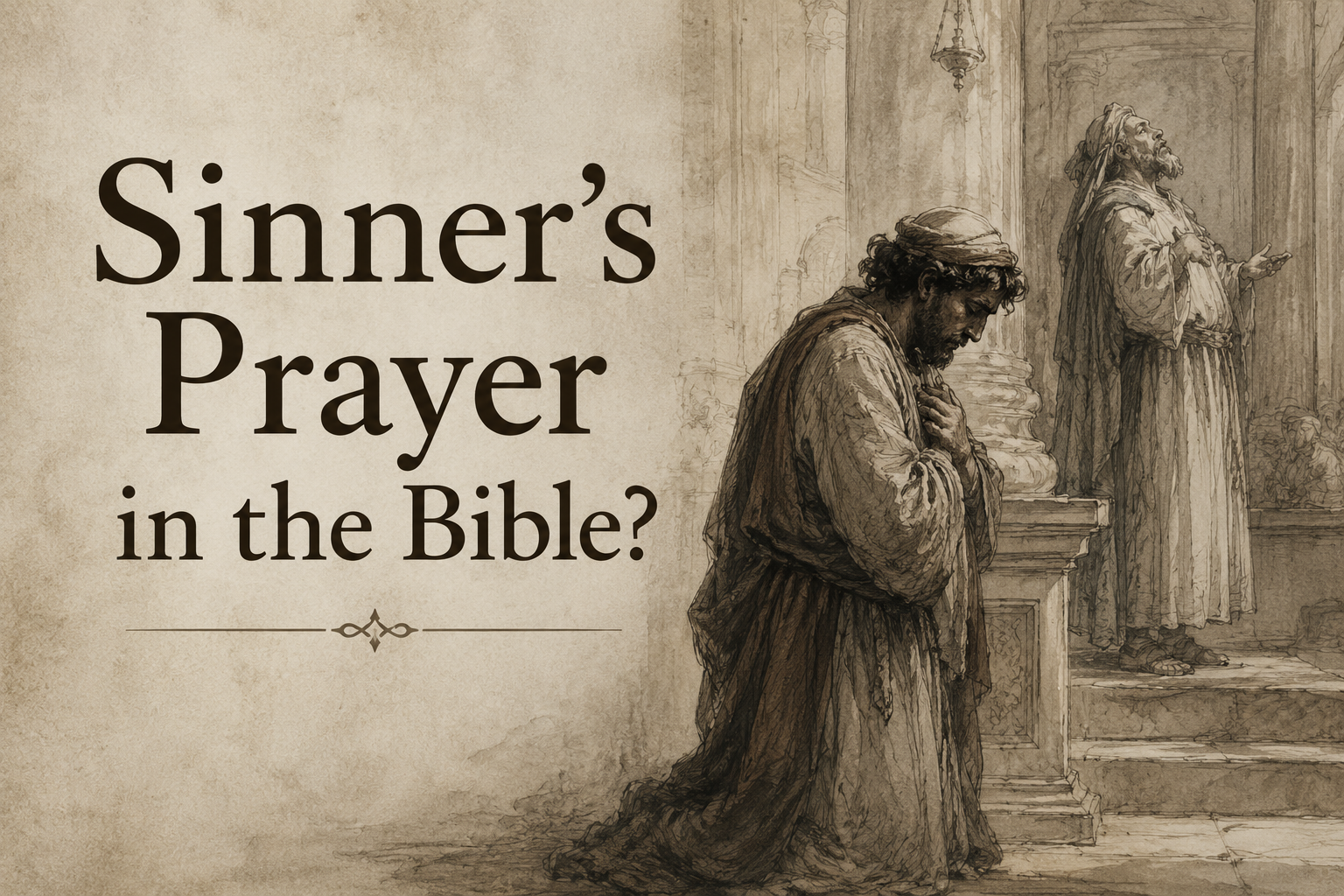
However, there are a couple examples of sinners’ prayers throughout the Bible. Consider the tax collector’s “God, have mercy on me, a sinner!” as one such prayer (Luke 18:9-14). I noticed an interesting one this morning. It is a prayer that is actually prescribed! In Hosea 14, God calls wayward Israel to return to him. He tells them through Hosea to “take words of repentance with you and return to the Lord” (Hosea 14:2).
Hosea then proceeds to tell them what to pray, as if saying “repeat after me.” He tells Israel, “Say to him [God], ‘Forgive our iniquity and accept what is good, so that we may repay you with praise from our lips. Assyria will not save us, we will not ride on horses, and we will no longer proclaim, ‘our gods!’ to the work of our hands. For the fatherless receives compassion from you’” (Hosea 14:2-3).
Continue reading “Sinner’s Prayer in the Bible? (Hosea 14:1-3)”
