Kids & Kingdom- What is the Imago Dei, Anyways?

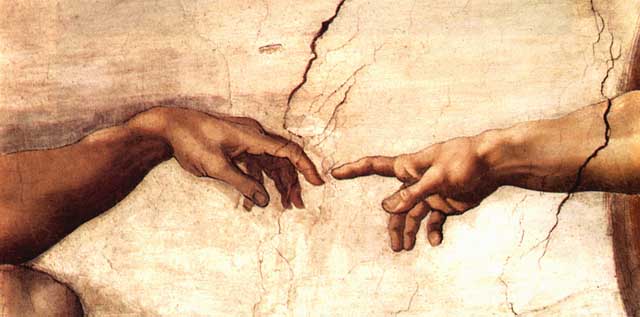
Back to Genesis. “God said, ‘Let us make man in our image, after our likeness’” (Gen 1:26). As we saw in my first post in this series, this verse informs God’s mandate to ‘be fruitful and multiply’ in Genesis 1:28. God wanted Adam and Eve to fill the earth with fellow image bearers of God.

The concept of being created the image of God has historically been referred to by the Latin phrase imago dei, and it has received a lot of attention throughout church history with many asking, “what is the image of God?”

Having an accurate answer to the question is a necessity. If we are called to multiply image bearers, what are we called to multiply? What does it mean to bear God’s image? Do we still bear God’s image after the fall? If so, in what ways? And why does it matter? I want to answer all of these questions in this chapter, because I  believe that comprehending the imago dei helps us read the Bible better, appreciate work of Christ more, and understand our role as parents more clearly.

Continue reading “Kids & Kingdom- What is the Imago Dei, Anyways?”

Kids & Kingdom- Children After the Fall: Difficult Discipleship

If the contents of my first post seemed too idealistic, this post may seem too realistic. Many parents or teachers may not feel like the language of the previous chapter- blessing and privilege and joy- describes their current experience with kids. These words are true of children, as we saw in Psalm 127,  but other words may also describe the reality of raising them: frustration, impatience, and difficulty. Why is this so? Because the serenity of the first chapter of Genesis quickly turns into chaos a few chapters later. And we live (and have kids) in the aftermath of the latter.

God’s first mandate to be fruitful and multiply was given before the fall, before sin entered the world. Thus, being fruitful and multiplying would have naturally led to filling the earth with children who grew up to be adults who walked with God in perfect harmony like Adam and Eve did. That was the ideal.

Raising children in a pre-fall environment would have been relatively uncomplicated. Imagine raising a toddler who isn’t filled with impassioned rage when you give him the wrong color cereal bowl or teenager who doesn’t struggle with pride or self-image. Unfortunately, no child was ever born into that environment.

When Adam and Eve ate from the forbidden tree, they sinned against God. They declared themselves to be the masters of their lives instead of submitting to God’s lordship and authority. They fractured the relationship they previously enjoyed by rebelling against their Creator. Instead of looking to, worshiping, and following the One who made them, they looked to, worshiped, and followed their own selfish desires. As a result, the serpent’s promise came true: their eyes were opened and they knew good and evil. But their newfound experiential knowledge of evil came with a great cost.

Everything Is Broken

The primary effect of Adam and Eve’s sin was the fracture in their relationship with God. The innocence and intimacy they enjoyed with him was broken. The ripple effect of that fracture spilled over into every aspect of their lives. Everything about life became more difficult, because everything in life was broken because of sin. That’s what theologians call “the curse of sin.”

There are several aspects to this curse. First, Adam and Eve recognize that they are naked and make clothes (Gen 3:7). A lot more difficult than wearing your birthday suit every day. Second, they hide from God (Gen 3:8). Their relationship with him is now hindered by shame and guilt. Third, there is enmity between the seed of the woman and the seed of the serpent (Gen 3:15). We see the difficulty of their warfare all throughout the Bible and around us still today.

Fourth, the woman’s pain in childbearing is increased (Gen 3:16). The blessing of giving birth now comes with hardship and pain from the moment of conception until the moment of birth. Many women may struggle to get pregnant or stay pregnant, both of which are effects of child birth in a fallen world. Even those who do carry to full term experience discomfort and pain, and many mothers give their lives in child birth.

Fifth, the relationship between husband and wife will be difficult due to contrary desires (Gen 3:16). Sixth, all work will be more difficult, plagued by the effects of sin (symbolized by thorns, Gen 3:17). Finally, mankind will return to dust. They will die because death now reigns (Gen 3:19). All of life will be a struggle all the way up until the final struggle of death. Everything is more difficult now.

This is the environment that children are born into. In fact, it begins before they’re even born. Couples may struggle to get pregnant, experience miscarriages, or give birth to stillborn babies. And once they’re born, it doesn’t get any easier, because parents, who are sinners themselves, are tasked with raising other sinners in a world plagued by the deadly effects of sin.

Continue reading “Kids & Kingdom- Children After the Fall: Difficult Discipleship”

Kids & Kingdom- Introduction

There’s an old saying, “kids don’t come with a manual,” and it is certainly true. When we brought home our first newborn, I wished such a manual did exist, equipped with instructional videos and all! There were so many things that I did not know to do, much less how to do them. Thankfully my wife was a natural. But there were days where even she could have benefited from such a guide.

As my kids have grown older, I have learned more about children. But I still think a manual would be helpful. To an extent, it is true that such a manual doesn’t exist. They don’t send you home from the hospital with a manual for the next 18 years. Nor will the local school give you a gender specific, step-by-step guide that is tailored to your child’s personality and can be used in every season of their life. But there is a “manual” for parents that far surpasses all of these.

As Christians, we believe that the Bible is sufficient for all things pertaining to salvation and godly living. In other words, it not only tells us how to find life but also, having found life, how we ought to live. We call this the sufficiency of Scripture, and it extends to every area of our life, including parenting. The Bible is our manual for life, and as such, our manual for raising children.

Now, let me be clear. The Bible is not a how-to book on parenting, but it is an excellent resource for parenting. It answers all of life’s deepest questions about life, death, good, evil, right, and wrong. It shows parents where they themselves can find life in Christ and equips them to share that life with their children.

Therefore, we should expect to find in the Scriptures a cohesive view of what it means to have children and what our goal should be in raising them. To explore such a view, I want to take a biblical-theological approach to the topic of children by beginning in Genesis and tracing the theme of children all the way to Revelation. I plan to write on six sections that summarize the primary chapters in the story of redemption: Creation, Fall, Israel, Gospels, Church, and New Creation.

I hope that this study will enable the reader to see that children are an integral component to the kingdom of God, and that without them, the storyline of Scripture as we know it cannot be shared or celebrated.

How to Share Christ Effectively (Colossians 4:2-6)

As Paul moves towards the conclusion of his letter, he asks the Colossians to partner with him in his life’s calling: proclaiming the mystery of Christ. He invites them to play their role in God’s mission by praying for and supporting him in his mission field (now prison), but also by engaging in their own mission field. He writes in Colossians 4:2-6,

Devote yourselves to prayer, keeping alert in it with an attitude of thanksgiving; praying at the same time for us as well, that God will open up to us a door for the word, so that we may proclaim the mystery of Christ, for which I have also been imprisoned; that I may make it clear in the way that I ought to proclaim it.

5Conduct yourselves with wisdom toward outsiders, making the most of the opportunity. Your speech must always be with grace, as though seasoned with salt, so that you will know how you should respond to each person.” (NASB)

There are two primary commands in this section. The first is to pray for opportunities to witness and the second is to take advantage of those opportunities. I use “witness” here as the term to define any opportunity we have to share Christ with those who do not know him. Let’s consider each of these commands in turn and consider how they apply to our lives.

We Must Pray for Witnessing Opportunities

It is important to note that Paul begins this section by encouraging prayer. And not just any kind of prayer. Paul encourages the Colossians to missions minded kingdom expanding prayer.  He doesn’t give them a list of his physical needs, but asks them to pray that he (and they) will be effective in reaching the lost. Effective evangelism always begins with prayer.

Paul asks the Colossians to pray for God to open up a door for the word. In Acts 14:27 and 1 Corinthians 16:9, God is the one who opens the door for the gospel. He does this through providing opportunities to share Christ and opening the hearts of those who hear. Paul, now in prison, asks for the Colossians to pray that God will continue opening doors for him to preach Christ.

Continue reading “How to Share Christ Effectively (Colossians 4:2-6)”

How is Good Friday “Good?”

Our church recently released an album entitled He Won’t Fail that features live recordings of our worship arts team performing some of our favorite worship songs of the past year. Each staff member wrote a devotional for each song. Below is my devotional for Sunday is Coming by Phil Whickam.

And we know that God causes all things to work together for good to those who love God, to those who are called according to His purpose. – Romans 8:28 NASB

When we think of something that’s good, we don’t typically think of someone suffering or dying. Much less an innocent person unjustly suffering and dying. But that’s exactly what we do when we call the Friday before Easter “Good Friday.” What could possibly be good about that day?

If we look at the circumstances of that Friday, they certainly do not appear to be good. The Son of God, the Eternal Word, the Creator Incarnate who healed the sick, raised the dead, and preached good news to the poor, hung on a Roman cross awaiting His death. He was scorned by His own people and abandoned by most of His disciples. Not good by any stretch of the imagination.

But there’s more to the circumstances than what meets the eye. This was no ordinary Roman crucifixion. Jesus of Nazareth was unjustly condemned, but he was there willingly. “He let those soldiers take Him in, as His friend betrayed Him with a kiss. There before the mocking crowd, like a lamb to the slaughter didn’t make a sound. Then He carried that cross to Calvary.” Why? So he could “shed His blood to set us free!”

The cross shows us that even in the most unjust evil, God is at work bringing about the greatest good. All of mankind was separated from God because of our sin, and our only hope of salvation was for the Perfect Lamb of God to come, live, and die for us. We could only be reconciled to God if Jesus absorbed the wrath of God and paid the wages of our sin, which is death. And He did exactly that. He breathed His last breath on the cross and bowed His head, “the Son of God and man was dead.”

But that wasn’t the end.” What wasn’t the end? Friday! A Sunday was coming- a day that was a part of the plan all along. When that Sunday came, the women went to the tomb and found a rolled away stone. They were greeted with a question, “Why are you looking for the living among the dead?” He’s alive!

There’s the good! In fact, it’s the greatest good in all of human history. The Son of God died for our sins and rose from the dead to defeat sin and death forever! But here’s the lesson for us: without the death, there could be no resurrection. Without Friday, there could be no Sunday. Friday’s good cause Sunday’s coming.

For all those who have trusted Christ, Jesus’ death and resurrection is a picture of how God works in our lives. God promises to work everything out for our good and His glory, including our pain and suffering. Even in all our Fridays, there is a Sunday coming. Jesus will return and we will obtain our resurrection bodies. On that day, we will see all the good that God has worked through our trials, and all the glory that it has brought Him. But until that day, “we watch and wait, like a bride for a groom, Oh church arise, He’s coming soon.”

Prayer: Father, thank you for your promise that you will work all things for our good and your glory. We praise you for the perfect example of that promise that we see in your Son on Good Friday and Resurrection Sunday. Help us to look to Him and find strength to trust you in the midst of whatever we are going through, knowing that our Sunday is coming, too. Amen.
Throw Away the Grave Clothes and Put On the Grace Clothes (Colossians 3:5-17)

Have you ever spent a long day working outside in the heat? During the warmer months, I spend at least one day a week working in the yard. After such a day, my clothes are usually a dirty smelly mess, and I have to shower before doing anything else. My clothes are so filthy that I almost feel bad even putting them in the dirty clothes basket alongside other dirty clothes (that aren’t nearly as dirty).

Now imagine what it would feel like to put those clothes back on after getting out of a nice long shower. It would be just…wrong. Why? Because after getting clean, you should put on clean clothes. You should adorn yourself with what is now true of your nature. You’re no longer a dirty sweaty mess, so you shouldn’t wear dirty sweaty clothes. You’re clean. So you should wear clean clothes. Simple enough, right?

This is essentially Paul’s argument in Colossians 3:5-17. Since we have died to our old selves and old ways, we should put off our old clothes. Since we have been cleansed and raised with Christ, we should put on new clothes of righteousness. But how do we do that? What clothes should we remove, and which should we put on? What does that look like in real life? This passage has the answers.

Grave Clothes

First, we must take off our grave clothes, “for we have died, and our life is hidden with Christ in God” (3:3). However, Paul uses much stronger language than just “putting off” our old clothes. He says that we are to, “put to death” certain characteristics of our life before Christ (3:5). We are to kill our old habits and ways- sexual immorality, impurity, passion (lust), evil desire, and covetousness (3:5). All of these lead to idolatry because we cannot pursue them and also submit to the Lordship of Christ.

Brothers and sisters, if you are still in sexual sin, you must put it to death. It is a suffocating garment of death that rots the soul and destroys relationships. Do everything you can to put a bullet in the head of sexual temptation and sin!

Continue reading “Throw Away the Grave Clothes and Put On the Grace Clothes (Colossians 3:5-17)”

Christ, Who is Your Life (Colossians 3:1-4)

Guest written by Mark Shideler

In Colossians 3:1-4, Paul takes us through a progression of “If, Then, Why?” to teach us how to live our physical life on this earth with spiritual things in mind.

IF…

Paul writes in verse 1, “If then you have been raised with Christ…”

This question is pointing back to what he shared with the Colossians in chapter 2:13 , “…you, who were dead in your trespasses and the uncircumcision of your flesh, God made alive together with him, having forgiven us all our trespasses…”

The Bible paints a very bleak picture of our spiritual state without Christ. Although we are born into this world physically alive, we are spiritually dead. We have no ability to come to God or desire to do so. Our sin separates us from God and actually makes us God’s enemy (Romans 5:10).

Modern religion often incorrectly portrays God as a sort of doting grandparent. But God doesn’t just adore us no matter what we do. He is a righteous judge who must punish sin. He is actually angry with our sin and can’t overlook it just because He loves us. However, He displayed His love by providing a way for our sin to be forgiven (even though we didn’t deserve it).

When we could never get to God, God came to us. Jesus Christ died to fulfill the legal transaction necessary to forgive sin – an innocent life dying for a sinful life. When we repent of our sin and place our faith in Christ’s sacrifice, we are forgiven, raised from death to life, and brought into fellowship with our Creator.

Paul didn’t take for granted that this transformation had happened in the life of every person in the church of Colossae. He says “IF” this has happened…

I wonder, would we be shocked at how many spiritually dead people attend church every week? Going to church, doing good things, getting baptized, and even believing in God cannot raise a dead soul to life. Only repentance of sin and faith in the finished work of Christ’s sacrifice can do that. All of us should heed Paul’s admonishment in 2 Corinthians 13:5 to examine ourselves to make sure we are in the faith.

Continue reading “Christ, Who is Your Life (Colossians 3:1-4)”

Is Trusting Jesus Enough for Salvation? (Colossians 2:16-23)

Is trusting Jesus enough for salvation? Can it really be that simple? Or is there a deeper, hidden meaning within Christianity? Are there religious practices for the spiritually elite that make us more acceptable to God and draw us closer to him? These are some of the questions the Colossians wrestled with. Fortunately for them (and us), Paul addresses in our text this week, Colossians 2:16-23. The passage reads,

“16 Therefore let no one pass judgment on you in questions of food and drink, or with regard to a festival or a new moon or a Sabbath. 17 These are a shadow of the things to come, but the substance belongs to Christ. 18 Let no one disqualify you, insisting on asceticism and worship of angels, going on in detail about visions, puffed up without reason by his sensuous mind, 19 and not holding fast to the Head, from whom the whole body, nourished and knit together through its joints and ligaments, grows with a growth that is from God.

20 If with Christ you died to the elemental spirits of the world, why, as if you were still alive in the world, do you submit to regulations— 21 “Do not handle, Do not taste, Do not touch” 22 (referring to things that all perish as they are used)—according to human precepts and teachings? 23 These have indeed an appearance of wisdom in promoting self-made religion and asceticism and severity to the body, but they are of no value in stopping the indulgence of the flesh.”

There are two commands in this passage. The first, to not let anyone pass judgment on your faith. Second, to not let anyone disqualify you. Let’s consider each of these in turn.

1. Let no one pass judgment on you (2:16-17)

    The believers at Colossae were being judged by those who thought they needed to add another element to their faith. Followers of Jesus were being told by people of Jewish background that they also needed to practice Sabbath, keep Jewish festival days, and observe dietary laws. In other words, their faith in Christ was not enough, unless the Jewish traditions were observed in addition to it.

    Paul tells the Colossians, “don’t let these people judge you.” We can’t keep people from judging us. But we can shrug off their judgments. This is what Paul is telling the Colossians to do- they are to pay no attention to those who judge them in this regard. Why? Because all of these things are a shadow of the things to come, but the substance belongs to Christ.

    Take the Sabbath, for example. The Sabbath was a day of rest from work to enjoy God and his blessings. The Sabbath was a shadow that pointed to the future substance, who is Christ. He has provided ultimate, eternal rest for God’s people. There’s no working for our salvation, but rather resting in what Christ has done for us. He beckons those who are weary and heavy laden to come to him and find rest (Matt 11:28).

    So it is with all of the Jewish traditions. They were shadows that pointed to Christ! He is the true temple, the true Passover lamb, the true sacrifice, the true prophet, the true priest, the true king! There is no going back to these shadows, the substance has come!

    Continue reading “Is Trusting Jesus Enough for Salvation? (Colossians 2:16-23)”

    Walking While Remaining Rooted (Colossians 2:6-15)

    Why do you live the Christian life? After coming to faith in Christ, why keep pursuing him? Why keep coming to church? Why should we keep reading the same stories, preaching the same gospel, and doing the same things? Why not try something new? Paul answers these questions in our text this week.

    In Colossians 2:6-15, Paul encourages his readers to continually pursue Jesus, but he also tells them why. He writes, “Therefore, as you received Christ Jesus the Lord, so walk in him, rooted and built up in him and established in the faith, just as you were taught, abounding in thanksgiving” (2:6-7).

    Notice the command: walk in Christ! Paul adds, “just as you have received him.” In other words, they needed to hold fast to the gospel that was preached to them: salvation by grace through faith in the divine Son who died for our sins, rose from the dead, and ascended into heaven (see 1 Cor. 15:1-4).

    Christ is the vine, we are the branches (John 15:5). We are rooted, built up, and established in him (v. 7). Spiritual growth comes not by moving on to “bigger and better” religious practices or philosophies, but my remaining tethered to Christ and deepening our roots in him.

    This leads to the second command: don’t be taken captive. “See to it that no one takes you captive by philosophy and empty deceit, according to human tradition, according to the elemental spirits of the world, and not according to Christ” (2:8).

    It’s almost as if Paul anticipates the Colossians taking the role of my six  year old who’s favorite question is, “why?” The what is the command: walk in Christ! Don’t be taken captive by anything or anyone else! But the why is found in 2:9-15. In fact, there are multiple whys, multiple reasons why the Colossians, and why we by default, have no where to turn besides Christ:

    1. The whole fullness of deity dwells in Christ.

    This is another undeniable statement of Christ’s deity. “For in him [Christ] the whole fullness of deity dwells bodily” (2:9). What a statement! In Jesus, the whole fullness of God dwells bodily. This is the miracle of the incarnation. The Son of God became man in Christ. If that is true, why would the Colossians need to look to anyone or anything else?

    2. You have been made complete in Christ.

    “…and you have been filled in him” (2:10a). The fullness of God that dwells in Christ has made us complete in him. He who fills all things has filled us in him.  In other words, the Son of God has made us whole. He has met our greatest need, which is reconciliation with God. Once reunited to him, we lack nothing. In Christ, we have everything (2 Peter 1:3).

    Continue reading “Walking While Remaining Rooted (Colossians 2:6-15)”