Augustine’s Encouragement to American Christians in Election Season: “The City of God” and its Modern Application

As we find ourselves in the midst of another election season, it’s easy to feel overwhelmed (and frustrated) by the flood of discussions, debates, and news cycles. How can we lift our eyes above the waters and find guidance and encouragement? As I have in past election seasons, I am reflecting once again on Augustine’s book, The City of God.

Even though it was written nearly sixteen centuries ago, I believe his profound work still speaks to us today. It explains the realities of the worlds, or the “cities,” in which we live, and offers wisdom on how to navigate the waters of our political landscape with faith and hope. Let me show you how!

Who Was Augustine?

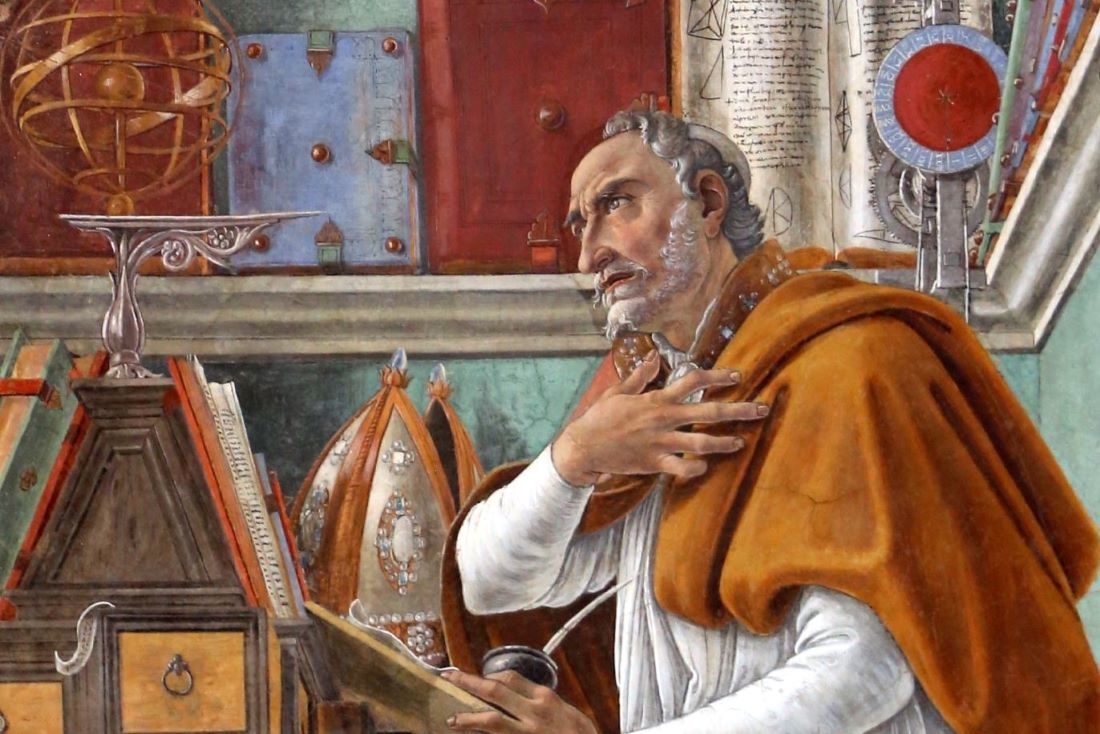
Augustine of Hippo was an early Christian theologian and philosopher. He was born in 354 AD in what is now Algeria and became one of the most influential figures in Christianity. He was, in a sense, one of the first great theologians of the church. It is said that all theological traditions, in some way or another, are indebted to Augustine. He is the fountainhead from which many streams of theology flow. His writings, especially Confessions and The City of God, have shaped Christian thought for centuries.

What Is “The City of God” About?

Augustine wrote The City of God in response to the fall of Rome in 410 AD. For the first time in centuries, Rome was not the superpower of the world, and many people blamed Christians for the collapse of the city, claiming that abandoning the old Roman gods had led to Rome’s downfall. Augustine wrote City of God to defend Christianity and to offer a broader perspective on history and society.

In his book, Augustine contrasts the “city of man” with the “city of God.” Both cities are marked by love. The city of man is characterized by self-love and pride, which leads to conflict and corruption. The city of God, on the other hand, is marked by the love of God and the building of His kingdom. Augustine encourages Christians to live in the city of man as citizens of the city of God until the day that God’s city triumphs. But how do we do that? Here are six ways.

Continue reading “Augustine’s Encouragement to American Christians in Election Season: “The City of God” and its Modern Application”

God’s Sovereignty In the Book of Acts: Ordaining the Cross

God’s-Sovereignty

“His Sovereignty rules over all.” – Ps. 103:19

I have often heard the phrase, “God is sovereign” in a way that has been spoken to me to give me encouragement in a tough time or situation. But I never really took the time to meditate on what it meant for Him to be sovereign. The term is defined by having supreme power and authority, a free ability to do as one pleases. In other words, God is in absolute control over every situation, and works out everything according to His will. Think on it for a while, and it will drive your brain into massive confusion. However, we are called to submit ourselves to and believe what scripture tells us, and trust in his sovereignty.

These past few days, I have read through the book of Acts, and I was struck with how much it reveals about God’s sovereignty-with regards to salvation! I simply would like to share them with you in a 3 part series, so that you too can see how God has worked out salvation for his people, and how you, too, if in Christ, were brought into salvation by his amazing grace.

In this first post, Lets look at the major theme of sovereignty in how God ordained the cross:

  • Jesus, delivered up according to the definite plan and foreknowledge of God” Acts 2:23

I had a very interesting conversation with a Muslim man the other day, who asked me if Christians hated Jews, because they were the ones who “killed Jesus.” This was the first time that I had really come across this misconception. Before I could reply, my friend with me answered, “No,no,no, we don’t hate them at all. We believe it was God’s plan all along, that he used the Jews and the Romans to accomplish his purpose of sacrificing Jesus!” This can be a tough pill to swallow, but Acts 2:23 clearly states for us that Jesus was crucified because it was the definite plan and foreknowledge of God. Let’s look at another verse:

  • What God foretold by the mouth of all the prophets, that his Christ would suffer, he thus fulfilled.” Acts 3:18

In this verse we are told that not only did God plan it from the beginning, but you can see his plan through reading the prophets in the Old Testament. Lets look at one of the most well-known passages. Isaiah 53:5 reads, “But he was wounded for our transgressions, he was bruised for our iniquities: the chastisement of our peace was upon him, and with his stripes we are healed.” Isn’t is incredible that these words were written 600-700 years before Jesus birth? There are over 300 in the Old Testament like it! God surely had a plan, and was voicing it to his people all throughout history.

If you haven’t been convinced yet, lets look at one last verse,

  • For truly in this city there were gathered together against your holy servant Jesus…Herod and Pontius Pilate, along with the Gentiles and the people of Israel, to do whatever your hand and your hand had predestined to take place.” Acts 4:27-28

In the most heinous crime committed in the history of mankind, God was behind the scenes, sovereignly ruling. His hand predestined for Jesus to go to the cross, and to bear the weight of our filthy sin. He planned it all, so that whosoever would repent and believe in Him, would have eternal life. This was the depth of his love for us, that he would send his own Son, who would be despised and rejected, so that we might have life with Him. “But God showed his love for us in that while we were still sinners, Christ died for us” Romans 5:8. Recognizing this plan helps us understand the cornerstone of the gospel, seen in Isaiah 53:10,” Yet it was the Lord’s will to crush Him.” Him- meaning Jesus.

People everywhere are commanded to repent and believe in this incredible gospel (Acts 17:30). How could we not accept so great a Savior? How could we not devote our lives to a God, who in his sovereignty planted the very tree that he would be crucified on-all to give us life and relationship with Him?

Truly, He is sovereign.