How is Good Friday “Good?”

Our church recently released an album entitled He Won’t Fail that features live recordings of our worship arts team performing some of our favorite worship songs of the past year. Each staff member wrote a devotional for each song. Below is my devotional for Sunday is Coming by Phil Whickam.

And we know that God causes all things to work together for good to those who love God, to those who are called according to His purpose. – Romans 8:28 NASB

When we think of something that’s good, we don’t typically think of someone suffering or dying. Much less an innocent person unjustly suffering and dying. But that’s exactly what we do when we call the Friday before Easter “Good Friday.” What could possibly be good about that day?

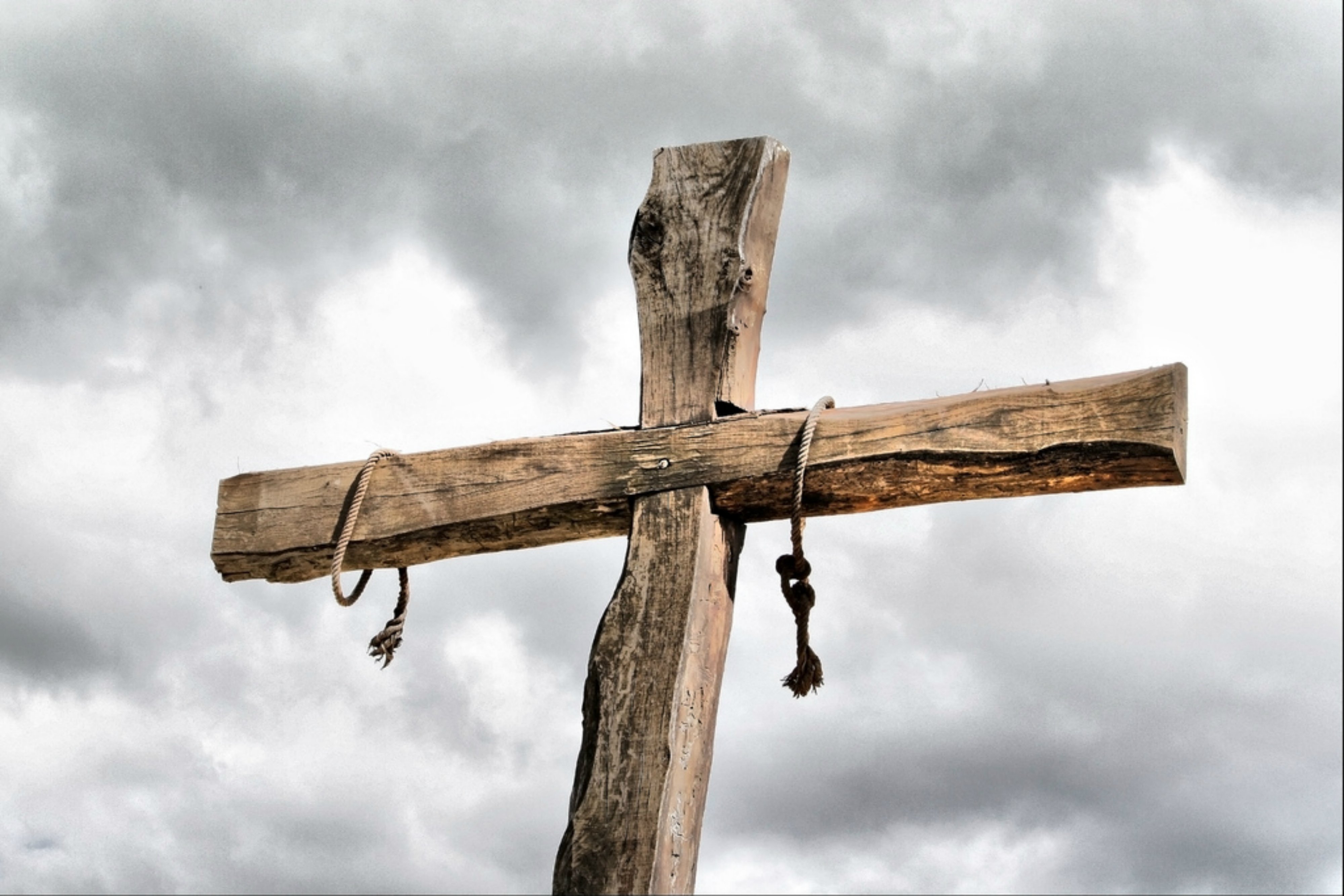
If we look at the circumstances of that Friday, they certainly do not appear to be good. The Son of God, the Eternal Word, the Creator Incarnate who healed the sick, raised the dead, and preached good news to the poor, hung on a Roman cross awaiting His death. He was scorned by His own people and abandoned by most of His disciples. Not good by any stretch of the imagination.

But there’s more to the circumstances than what meets the eye. This was no ordinary Roman crucifixion. Jesus of Nazareth was unjustly condemned, but he was there willingly. “He let those soldiers take Him in, as His friend betrayed Him with a kiss. There before the mocking crowd, like a lamb to the slaughter didn’t make a sound. Then He carried that cross to Calvary.” Why? So he could “shed His blood to set us free!”

The cross shows us that even in the most unjust evil, God is at work bringing about the greatest good. All of mankind was separated from God because of our sin, and our only hope of salvation was for the Perfect Lamb of God to come, live, and die for us. We could only be reconciled to God if Jesus absorbed the wrath of God and paid the wages of our sin, which is death. And He did exactly that. He breathed His last breath on the cross and bowed His head, “the Son of God and man was dead.”

But that wasn’t the end.” What wasn’t the end? Friday! A Sunday was coming- a day that was a part of the plan all along. When that Sunday came, the women went to the tomb and found a rolled away stone. They were greeted with a question, “Why are you looking for the living among the dead?” He’s alive!

There’s the good! In fact, it’s the greatest good in all of human history. The Son of God died for our sins and rose from the dead to defeat sin and death forever! But here’s the lesson for us: without the death, there could be no resurrection. Without Friday, there could be no Sunday. Friday’s good cause Sunday’s coming.

For all those who have trusted Christ, Jesus’ death and resurrection is a picture of how God works in our lives. God promises to work everything out for our good and His glory, including our pain and suffering. Even in all our Fridays, there is a Sunday coming. Jesus will return and we will obtain our resurrection bodies. On that day, we will see all the good that God has worked through our trials, and all the glory that it has brought Him. But until that day, “we watch and wait, like a bride for a groom, Oh church arise, He’s coming soon.”

Prayer: Father, thank you for your promise that you will work all things for our good and your glory. We praise you for the perfect example of that promise that we see in your Son on Good Friday and Resurrection Sunday. Help us to look to Him and find strength to trust you in the midst of whatever we are going through, knowing that our Sunday is coming, too. Amen.

A Children’s Easter Devotional Based on the Storyline of Scripture

Are you looking for a good Easter resource to use with your kids? I highly recommend to you a new free resource below from my friend Mark Shideler. It is a seven day study that reveals the storyline of Scripture and the meaning of Jesus’ life, death, and resurrection. It contains helpful summaries, discussion questions, and activities that reinforce each day’s theme.

I want to share an excerpt with you. Consider how Mark describes the purpose of God’s Law (how often do you see that in a kid’s devotional?) in Week 2:

Have you ever done something wrong? If we’re honest, we all have. But who decides whether something is “right” or “wrong”? God does! A long time ago, God gave the Israelites rules to keep if they wanted to show that they loved God. He called these rules His law. The law was for us, too (not just the Israelites). When we break God’s law today, we feel bad about it, and that feeling is called “guilt.” God’s law has A LOT of rules in it that are VERY hard to keep. In fact, it’s completely impossible for any person to keep all of God’s rules. That sounds pretty hopeless doesn’t it? But actually, that’s the whole point! See, God didn’t give the law so we would try to keep it and be perfect. He gave the law to show that we are all sinners who need a Savior. We have ALL broken God’s law, and our sin has to be punished. Breaking God’s law has consequences (just like breaking our government’s law does), and God has to judge sin because He always does what is right. One of sin’s consequences is that it keeps us from being friends with God because God is perfect. In fact, the Bible says our sin makes us God’s ENEMY! In order to be friends with God, we have to have our sins forgiven. Every time we sin or feel guilty, it should remind us that we need a Savior.

Mark proceeds to show how Jesus is the Savior we need, who lives a perfect life on our behalf (thus fulfilling the law), yet dies to pay the debt of our sin (another lesson in which Mark helpfully describes what a debt is), and defeats our greatest enemies of sin, death, and Satan. This is how Jesus has enabled us to be friends with God (the way Mark describes redemption in kid-lingo!).

This is an excellent resource that will not only bless children, but also their parents as they walk their kids through it! I will be using it with my kids, and I hope you do too!

Click the link below to download the free resource:

https://drive.google.com/drive/folders/1NtGFK88hVDgikDzR2g759pXwoUY3KBBM?fbclid=IwAR0G8lZrArw2Cl57CGlxGHOa2G-22zZdB2enlrHEN6pHh3SvUiSuVIVtKmE

The Preeminent King Who Reconciles All Things

Our focus as a church this week was on the preeminence of Christ. Preeminence refers to the exclusive right of being first, supreme, or surpassing all others. The Son of God in the person of Christ is preeminent (Colossians 1:18). He is before all things (1:16) because He created all things (1:15-16) and holds all things together (1:17b).

Christ is also preeminent over the church (1:18). The church is made up of those whom Christ created; they are part of the “all things” He created in 1:16, who rebelled against Him (1:21) but have been reconciled back to Him (1:22). But how did this reconciliation occur? By the preeminent One “making peace through the blood of His cross” (1:20).

The beauty of the gospel captured my heart this Sunday. Colossians 1 presents the Son as the One who created all things and currently holds all things together. But it also presents Him as the One who reconciles all things by His own death. Only the One who created all things can reconcile all things back to Himself- and there was only one way for Him to do that- “by the blood of His cross” (1:20).

Here is the prominent reminder for us: everything that we need, from the greatest need of salvation to the smallest need of our next breath: Christ provides. He created all things. He sustains all things. He reconciles all things. By the blood of His cross.

God’s Sovereignty In the Book of Acts: Ordaining the Cross

God’s-Sovereignty

“His Sovereignty rules over all.” – Ps. 103:19

I have often heard the phrase, “God is sovereign” in a way that has been spoken to me to give me encouragement in a tough time or situation. But I never really took the time to meditate on what it meant for Him to be sovereign. The term is defined by having supreme power and authority, a free ability to do as one pleases. In other words, God is in absolute control over every situation, and works out everything according to His will. Think on it for a while, and it will drive your brain into massive confusion. However, we are called to submit ourselves to and believe what scripture tells us, and trust in his sovereignty.

These past few days, I have read through the book of Acts, and I was struck with how much it reveals about God’s sovereignty-with regards to salvation! I simply would like to share them with you in a 3 part series, so that you too can see how God has worked out salvation for his people, and how you, too, if in Christ, were brought into salvation by his amazing grace.

In this first post, Lets look at the major theme of sovereignty in how God ordained the cross:

  • Jesus, delivered up according to the definite plan and foreknowledge of God” Acts 2:23

I had a very interesting conversation with a Muslim man the other day, who asked me if Christians hated Jews, because they were the ones who “killed Jesus.” This was the first time that I had really come across this misconception. Before I could reply, my friend with me answered, “No,no,no, we don’t hate them at all. We believe it was God’s plan all along, that he used the Jews and the Romans to accomplish his purpose of sacrificing Jesus!” This can be a tough pill to swallow, but Acts 2:23 clearly states for us that Jesus was crucified because it was the definite plan and foreknowledge of God. Let’s look at another verse:

  • What God foretold by the mouth of all the prophets, that his Christ would suffer, he thus fulfilled.” Acts 3:18

In this verse we are told that not only did God plan it from the beginning, but you can see his plan through reading the prophets in the Old Testament. Lets look at one of the most well-known passages. Isaiah 53:5 reads, “But he was wounded for our transgressions, he was bruised for our iniquities: the chastisement of our peace was upon him, and with his stripes we are healed.” Isn’t is incredible that these words were written 600-700 years before Jesus birth? There are over 300 in the Old Testament like it! God surely had a plan, and was voicing it to his people all throughout history.

If you haven’t been convinced yet, lets look at one last verse,

  • For truly in this city there were gathered together against your holy servant Jesus…Herod and Pontius Pilate, along with the Gentiles and the people of Israel, to do whatever your hand and your hand had predestined to take place.” Acts 4:27-28

In the most heinous crime committed in the history of mankind, God was behind the scenes, sovereignly ruling. His hand predestined for Jesus to go to the cross, and to bear the weight of our filthy sin. He planned it all, so that whosoever would repent and believe in Him, would have eternal life. This was the depth of his love for us, that he would send his own Son, who would be despised and rejected, so that we might have life with Him. “But God showed his love for us in that while we were still sinners, Christ died for us” Romans 5:8. Recognizing this plan helps us understand the cornerstone of the gospel, seen in Isaiah 53:10,” Yet it was the Lord’s will to crush Him.” Him- meaning Jesus.

People everywhere are commanded to repent and believe in this incredible gospel (Acts 17:30). How could we not accept so great a Savior? How could we not devote our lives to a God, who in his sovereignty planted the very tree that he would be crucified on-all to give us life and relationship with Him?

Truly, He is sovereign.

Jesus in the Old Testament: Isaiah 53:7 (Part One)

He was oppressed, and he was afflicted, yet he opened not his mouth; like a lamb that is led to the slaughter, and like a sheep that before its shearers is silent, so he opened not his mouth. ” –Isaiah 55:7

The book of Isaiah was written about 2700 years ago, an entire 700 years before Jesus walked the earth. Yet he writes about Jesus several times, identifying several specific aspects about his life and death that are perfectly fulfilled at the end of Jesus’ life. This is clear proof that God had preordained and planned the very events of the crucifixion that would cover the sins of the world!

Verse 7 of Isaiah 53 says that Jesus didn’t open his mouth. What does this mean? Well, when Jesus was brought before Pilate, twice scripture tells us that he was accused by the high priests several times, and in Matt. 27:13 Pilate asks him, “Do you not hear how many things they testify against you?” And in verse 14 it says, “But he gave him no answer, so that the governor was greatly amazed.” In very good book I read this past month, Pontius Pilate, it describes how unusual this was that Jesus didn’t offer a defense against the accusations of the Pharisees. Those who weren’t guilty would emphatically declare their innocent, yet even those who were obviously guilty offered some type of argument or defense. Jesus didn’t need to argue back or defend himself, for he knew what was to come, and knew that a defense would only hurt his testimony, his humility, and his obedience to the Father. In that moment, we were on his mind, and he remained quiet to be obedient, fulfill what Isaiah wrote, and to humbly embrace the crucifixion sentence that was coming.

This passage of Isaiah also describes Jesus like a “lamb that is led to the slaughter.” In ancient Judaism, the lamb was the most powerful sacrifices to atone for sin. We can clearly see this in the Passover in Egypt, when the Hebrews were required to sacrifice a lamb and paint its blood over their door so that they would be saved. When the angel of death came through Egypt to fulfill the final plague, those who had the lamb’s blood over their door were “passed over” and were saved from death. We must not think that this referring to Jesus as a lamb is a coincidence! In John 1:29 we read, “The next day he saw Jesus coming toward him, and said, “Behold, the Lamb of God, who takes away the sin of the world!” John exclaimed this the first time that he saw Jesus, for he knew exactly who he was and exactly what he came to do. Likewise, Isaiah intentionally prophesies about Jesus, calling him a lamb. When we compare the use of the lamb to the passover story mentioned above, we can see an amazing parallel that relates directly to Jesus’ sacrifice on the cross for us. Those for whom Jesus died (believers) are covered by the blood of the cross, just like the Hebrews were covered by the blood of the actual lamb, and by this covering we are saved from spiritual death, just as they were saved from a physical death!

It is through His death on the cross as God’s perfect sacrifice for sin and His resurrection three days later that we can now have eternal life if we believe in Him. The fact that God Himself has provided the offering (a perfect “lamb”) that atones for our sin is part of the glorious good news of the gospel that is so clearly declared in 1 Peter 1:18-21: “For you know that it was not with perishable things such as silver or gold that you were redeemed from the empty way of life handed down to you from your forefathers, but with the precious blood of Christ, a lamb without blemish or defect. He was chosen before the creation of the world, but was revealed in these last times for your sake. Through him you believe in God, who raised him from the dead and glorified him, and so your faith and hope are in God.


The next day he *saw Jesus coming to him and *said, “Behold, the Lamb of God who takes away the sin of the world! – See more at: http://bible.knowing-jesus.com/topics/Lamb-Of-God#sthash.0sFBM4vo.dpuf
The next day he *saw Jesus coming to him and *said, “Behold, the Lamb of God who takes away the sin of the world! – See more at: http://bible.knowing-jesus.com/topics/Lamb-Of-God#sthash.0sFBM4vo.dpuf The next day he saw Jesus coming toward him, and said, “Behold, the Lamb of God, who takes away the sins of the world!” John 1:29