How is Good Friday “Good?”

Our church recently released an album entitled He Won’t Fail that features live recordings of our worship arts team performing some of our favorite worship songs of the past year. Each staff member wrote a devotional for each song. Below is my devotional for Sunday is Coming by Phil Whickam.

And we know that God causes all things to work together for good to those who love God, to those who are called according to His purpose. – Romans 8:28 NASB

When we think of something that’s good, we don’t typically think of someone suffering or dying. Much less an innocent person unjustly suffering and dying. But that’s exactly what we do when we call the Friday before Easter “Good Friday.” What could possibly be good about that day?

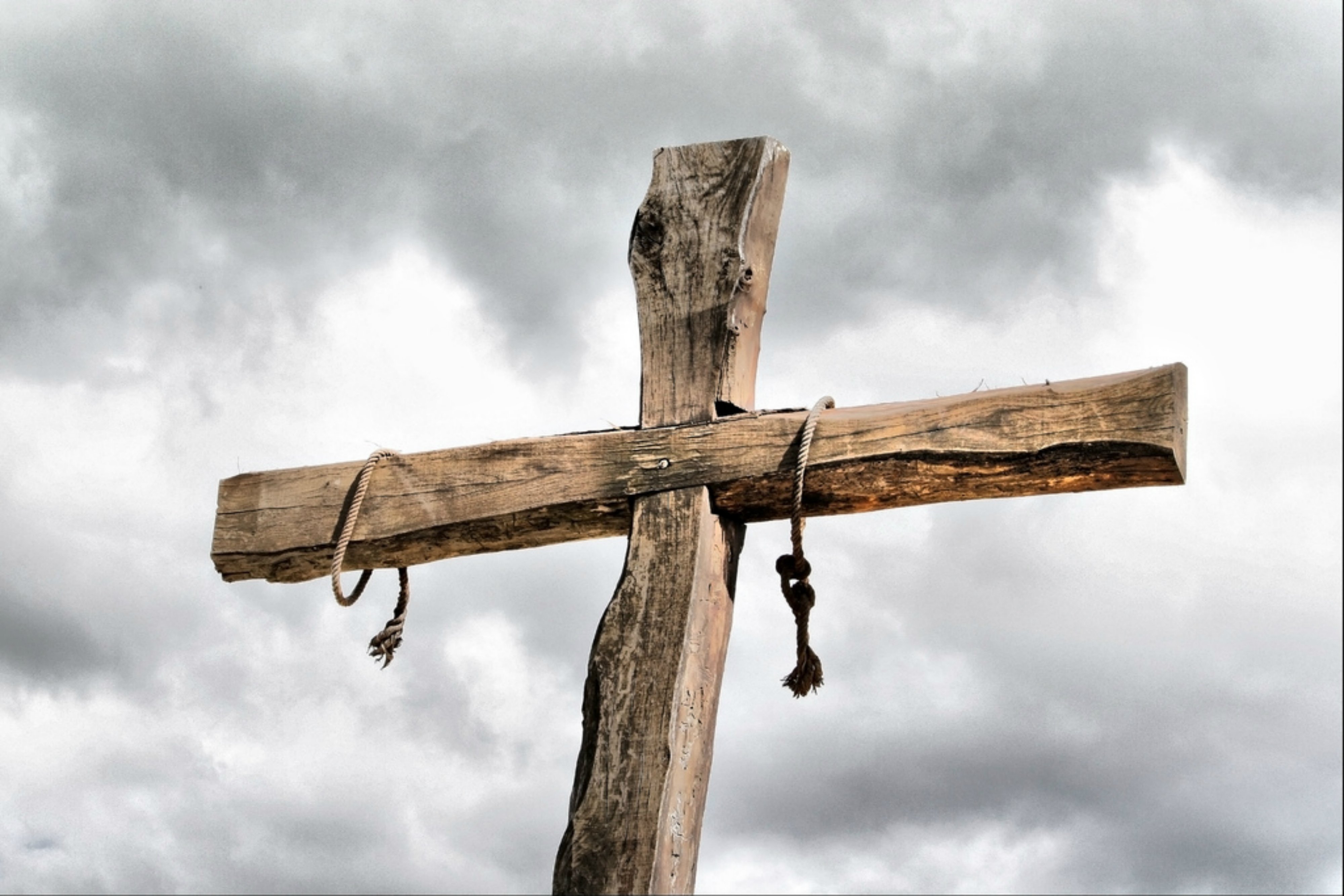
If we look at the circumstances of that Friday, they certainly do not appear to be good. The Son of God, the Eternal Word, the Creator Incarnate who healed the sick, raised the dead, and preached good news to the poor, hung on a Roman cross awaiting His death. He was scorned by His own people and abandoned by most of His disciples. Not good by any stretch of the imagination.

But there’s more to the circumstances than what meets the eye. This was no ordinary Roman crucifixion. Jesus of Nazareth was unjustly condemned, but he was there willingly. “He let those soldiers take Him in, as His friend betrayed Him with a kiss. There before the mocking crowd, like a lamb to the slaughter didn’t make a sound. Then He carried that cross to Calvary.” Why? So he could “shed His blood to set us free!”

The cross shows us that even in the most unjust evil, God is at work bringing about the greatest good. All of mankind was separated from God because of our sin, and our only hope of salvation was for the Perfect Lamb of God to come, live, and die for us. We could only be reconciled to God if Jesus absorbed the wrath of God and paid the wages of our sin, which is death. And He did exactly that. He breathed His last breath on the cross and bowed His head, “the Son of God and man was dead.”

But that wasn’t the end.” What wasn’t the end? Friday! A Sunday was coming- a day that was a part of the plan all along. When that Sunday came, the women went to the tomb and found a rolled away stone. They were greeted with a question, “Why are you looking for the living among the dead?” He’s alive!

There’s the good! In fact, it’s the greatest good in all of human history. The Son of God died for our sins and rose from the dead to defeat sin and death forever! But here’s the lesson for us: without the death, there could be no resurrection. Without Friday, there could be no Sunday. Friday’s good cause Sunday’s coming.

For all those who have trusted Christ, Jesus’ death and resurrection is a picture of how God works in our lives. God promises to work everything out for our good and His glory, including our pain and suffering. Even in all our Fridays, there is a Sunday coming. Jesus will return and we will obtain our resurrection bodies. On that day, we will see all the good that God has worked through our trials, and all the glory that it has brought Him. But until that day, “we watch and wait, like a bride for a groom, Oh church arise, He’s coming soon.”

Prayer: Father, thank you for your promise that you will work all things for our good and your glory. We praise you for the perfect example of that promise that we see in your Son on Good Friday and Resurrection Sunday. Help us to look to Him and find strength to trust you in the midst of whatever we are going through, knowing that our Sunday is coming, too. Amen.
A Children’s Easter Devotional Based on the Storyline of Scripture

Are you looking for a good Easter resource to use with your kids? I highly recommend to you a new free resource below from my friend Mark Shideler. It is a seven day study that reveals the storyline of Scripture and the meaning of Jesus’ life, death, and resurrection. It contains helpful summaries, discussion questions, and activities that reinforce each day’s theme.

I want to share an excerpt with you. Consider how Mark describes the purpose of God’s Law (how often do you see that in a kid’s devotional?) in Week 2:

Have you ever done something wrong? If we’re honest, we all have. But who decides whether something is “right” or “wrong”? God does! A long time ago, God gave the Israelites rules to keep if they wanted to show that they loved God. He called these rules His law. The law was for us, too (not just the Israelites). When we break God’s law today, we feel bad about it, and that feeling is called “guilt.” God’s law has A LOT of rules in it that are VERY hard to keep. In fact, it’s completely impossible for any person to keep all of God’s rules. That sounds pretty hopeless doesn’t it? But actually, that’s the whole point! See, God didn’t give the law so we would try to keep it and be perfect. He gave the law to show that we are all sinners who need a Savior. We have ALL broken God’s law, and our sin has to be punished. Breaking God’s law has consequences (just like breaking our government’s law does), and God has to judge sin because He always does what is right. One of sin’s consequences is that it keeps us from being friends with God because God is perfect. In fact, the Bible says our sin makes us God’s ENEMY! In order to be friends with God, we have to have our sins forgiven. Every time we sin or feel guilty, it should remind us that we need a Savior.

Mark proceeds to show how Jesus is the Savior we need, who lives a perfect life on our behalf (thus fulfilling the law), yet dies to pay the debt of our sin (another lesson in which Mark helpfully describes what a debt is), and defeats our greatest enemies of sin, death, and Satan. This is how Jesus has enabled us to be friends with God (the way Mark describes redemption in kid-lingo!).

This is an excellent resource that will not only bless children, but also their parents as they walk their kids through it! I will be using it with my kids, and I hope you do too!

Click the link below to download the free resource:

https://drive.google.com/drive/folders/1NtGFK88hVDgikDzR2g759pXwoUY3KBBM?fbclid=IwAR0G8lZrArw2Cl57CGlxGHOa2G-22zZdB2enlrHEN6pHh3SvUiSuVIVtKmE

The Preeminent King Who Reconciles All Things

Our focus as a church this week was on the preeminence of Christ. Preeminence refers to the exclusive right of being first, supreme, or surpassing all others. The Son of God in the person of Christ is preeminent (Colossians 1:18). He is before all things (1:16) because He created all things (1:15-16) and holds all things together (1:17b).

Christ is also preeminent over the church (1:18). The church is made up of those whom Christ created; they are part of the “all things” He created in 1:16, who rebelled against Him (1:21) but have been reconciled back to Him (1:22). But how did this reconciliation occur? By the preeminent One “making peace through the blood of His cross” (1:20).

The beauty of the gospel captured my heart this Sunday. Colossians 1 presents the Son as the One who created all things and currently holds all things together. But it also presents Him as the One who reconciles all things by His own death. Only the One who created all things can reconcile all things back to Himself- and there was only one way for Him to do that- “by the blood of His cross” (1:20).

Here is the prominent reminder for us: everything that we need, from the greatest need of salvation to the smallest need of our next breath: Christ provides. He created all things. He sustains all things. He reconciles all things. By the blood of His cross.

Why Did Jesus Say “I Thirst” On the Cross? A Sermon on John 19:28-29

I had the privilege of preaching the Good Friday sermon at our home church in Raleigh this year. When I was asked to preach, I was told that I would be continuing a series of the last seven words of Jesus, and the words that I would preach would be the words “I thirst” recorded in John 19:28. At first glance, I wondered how I could preach an entire sermon on these words. But as I continued to study them, I wondered how I could preach only one sermon on these words! What I found as I studied made this my favorite sermon I’ve preached to date. I wanted to share it here as well as my sermon transcript in case anyone would rather read it. However, please be aware that I try to write my manuscripts as I will preach them, so the verbiage/writing style may not be top-notch English!

Here is an audio file if you’d prefer to listen without video!

[Transcript: “I Thirst”; John 19:28-29]

If you knew you had just a few hours left to live, who would you want to talk to, and what words would you say? I would assume that most of us would want to speak to those we love, and we would want to offer words that express our love, that give comfort, and maybe even direction. When people have this opportunity- to think through and speak their “last words,” it can have a great impact. These words are remembered and cherished by those who hear them. Yet they also have the effect of revealing the heart of the person speaking them- who they love, what their hopes and fears are, whether they are content, joyful, or afraid.

Continue reading “Why Did Jesus Say “I Thirst” On the Cross? A Sermon on John 19:28-29″

Discovering The True Jesus (pt.3)- The Birth of a Savior

For unto you is born this day in the city of David a Savior, who is Christ the Lord. And this will be a sign for you: you will find a baby wrapped in swaddling cloths and lying in a manger.”   Luke 2:11-12

The virgin birth. In America, most of us hear this story every year during the Christmas season, so much so that I believe we have become calloused to the extraordinary way that Jesus entered into our world. The Bible teaches that Jesus was conceived by the Holy Spirit in a virgin named Mary. The angel Gabriel tells Mary, “behold, you will conceive in your womb and bear a son, and you shall call his name Jesus.”

Often times, we think of Jesus starting His whole life as an infant, but the Bible also teaches that He existed with the Father for all of eternity past. In the book of John, the author describes Jesus as the “Word,” stating that He was with God the Father in the beginning, and that God created all things through Him (John 1:1-3). God says before He creates man, “Let us make man in our image” (Gen 1:26). So, lets think briefly about the transition from Jesus’ life in heaven to His “birth” on earth….what do you think it was like?

Hard to think about, isn’t it? Thankfully, in Philippians, the author lays out for us what Jesus did when He chose to come to earth:”Christ Jesus, who, though he was in the form of God, did not count equality with God a thing to be grasped, but emptied himself, by taking the form of a servant, being born in the likeness of men” (Phil 2:5-7). Jesus completely humbled himself in leaving his heavenly throne to come live as one of us….to ultimately die for us and save us. He was born in the likeness of men, so that He could be the perfect sacrifice for men.

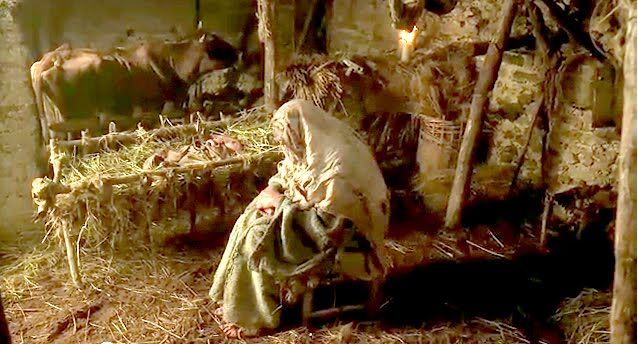
Speaking of Jesus’ humbling himself, look at where He was born! In our first text in Luke, we saw that it was said that Jesus would be found lying in a manger. A manger is a feeding trough used to feed farm animals. It was in the center of the holding houses and likely the dirtiest part of the barn. When animals eat…they often relieve themselves in the same spot. This is likely what the scene actually looked like:

manger

Jesus, the Son of God, came into the earth and spent His first few minutes on earth in one of the dirtiest environments. Why? Humility. Jesus humbled Himself, remember? Is this the way for an earthly King to enter the world? Certainly not. But we will learn of Jesus throughout our study, that He does nothing like an earthly king would do. “My kingdom is not of this world” Jesus says in John 18:36. But I also believe that this was God’s way of showing that Jesus was the real deal. Jesus was humble and a servant from the get-go. He was willing to do whatever it takes to complete His purpose, and in this case-that meant being born in a dirty manger.

The last piece of this story that I want to unfold is: why was it necessary for Jesus to be born of a virgin?

All throughout the Bible, God required a perfect sacrifice to be made before Him to pay for sin committed. In the Old Testament, God’s law required His people to sacrifice “unblemished” lambs, bulls, and goats. If the sacrifice wasn’t perfect before God, it was unacceptable. In the same way, for Jesus to be the perfect and final sacrifice, He must be perfect and unblemished before God. Ever since Adam sinned in the garden, every human being has been born into sin, and the Bible depicts sin nature passing down from generation to generation through the father (Romans 5:12,17,19). It was critical Jesus not to be “born in sin” so that He could fulfill His role as the perfect sacrifice. This is why the Holy Spirit conceived Jesus in Mary’s womb, so that Jesus could circumvented the transmission of the sin nature and become a perfect man.

This little story has more depth than you thought, didn’t it? Its read every year at Christmas, but certainly worth celebrating the entire year. It marks the beginning of Jesus’ life on earth, and is absolutely crucial to the fulfillment of the rest of His mission. Jesus wasn’t only born in a dirty manger, but He would die on a bloody cross.

Tune in next week for part 4 of this series.

Discovering The True Jesus (pt.1)

For one of my Marketing classes this fall, I am required to write ten different blogs about anything that I am passionate about to practice gaining a presence on the web and to better “market” myself to employers/network associates/etc. So…I had to choose what to write on that would have a consistent theme throughout the semester. After much thought, I decided to write about….Jesus. Instead of marketing myself, why not market Him? Most of what I do in my life is based off of who He is and what He did- so why not share that with my peers and fellow students?

In order to do this, I plan on analyzing ten major events, stories from, or teachings about Jesus from the Bible, so that I can paint an overall picture of who the true Jesus is, and what He came to accomplish on earth. I hope that you will join me regularly on this journey, and comment and interact with me as I seek to unveil the truth about the most influential human being that ever walked the earth!

So, for my first post, I will simply introduce Jesus from a historical perspective, and how He is viewed by the world. Most credible historians agree that a man named Jesus did live 2000 years ago, and quickly gained a following that changed the course of the future forever. Josephus and Tacitus are some of the main secular historians who wrote about Jesus as they recorded events in Jerusalem and Rome near Jesus’ lifetime. However, there are countless hundreds of individuals who wrote about Jesus’ life, relaying information that they heard from eyewitnesses, within 100-200 years after His death. Any argument that Jesus never existed is not very credible, and goes against the grain of many leading (even secular) scholars. So then, if Jesus existed, what do people believe that He actually did? Who was He?

People of Jewish descent believe that Jesus was a man who claimed to be a messiah (a savior for the nation of Israel) but that He was a false messiah. Muslims believe that Jesus was just another prophet in a line of prophets before Muhammad. Secular historians believe that Jesus was just another religious individual who gained popularity after His death and started a new world religion. Christians believe that He is the Savior of the world, the Son of God who ransoms mankind. But most would refer to Jesus simply as a “good teacher” or a man with many helpful and wise teachings.

However, if Jesus is only a “good teacher,” what must we do with the fact that He claimed to be God’s Son? That He said He was the Messiah? That He said He would raise from the dead? Would “good teachers” say these things about themselves? I think not! Jesus, then, must either be a liar, a lunatic, or who He said He was. He cannot be just a good teacher, or even a prophet (because good teachers or prophets would not make false, incorrect claims about their identities and still be considered “good”). He is either intentionally lying (trying to deceive others), or He is crazy (He thinks He’s God’s Son!) or He is who He said He was (He was telling the truth!). These are the only three options for who Jesus can actually be.

So….who is He? What evidence is their to back up some of the world’s major views of Him? Is He who He claimed to be? Or was He disiluusioned? To learn about anyone’s life, we must go to the people that knew them best: their family members, their friends, their colleagues. Thankfully, Jesus’ closest friends wrote about His life in four distinct books called the Gospels. We will take a look at one story in the next blog and try to come a little farther in answering the question, “Who is the REAL Jesus?”

The Never-Changing God

Jesus Christ is the same yesterday and today and forever. (Hebrews 13:8)

Our God NEVER changes. One may think, “great, how is that of use to me?” It is of great importance to us! Think of the ways that Jesus responded to the crowds in the first chapters of Mark: there were three different instances when Jesus was almost crushed by crowds of people. He even had to tell his disciples to prepare a boat that He could get in if the crowds started to crush Him (yes, that many people were running to Him!) When He went home to sleep that night, the scriptures say that the entire town was at His house! Yet, He skipped his meal, stayed and ministered to and loved on the people so much that his own family remarked that he was “out of his mind.” So, if He never changes, He still has this disposition, and He still reacts this way to those who run to Him.

Here is solid comfort. Our human nature cannot be relied on, but we can rely on God! However unstable I may be, however fickle my friends may prove, God does not change. If He changed as we do; if He willed one thing today and another tomorrow, if He were controlled by His mood, who could reveal their secrets to Him? However, we can bring Him praise and worship, because He is ever the same! His purpose is fixed, His will is stable, His Word is sure. Here then is a Rock on which we may fix our feet, while the mighty oceans of life try to sweep us away. (My translation of A.W Pinks Attributes, pp 692 Kindle)

Think about it. His character is permanent. He could never change for the better, for that would imply that there was something about Him that needed improving before, and thus, He wouldn’t be a perfect God. He has always been, and forever will be, the same, perfect, God. The permanence of His character guarantees the fulfillment of His promises:

For the mountains may depart
    and the hills be removed,
but my steadfast love shall not depart from you,
    and my covenant of peace shall not be removed,
    says the Lord, who has compassion on you.”               Isaiah 54:10

His promises are true. His hatred of sin endures forever. His love for His children never changes. His satisfaction with the sacrifice His Son paid for our sins will never change…Aren’t you glad that our God never changes?

God’s Sovereignty In the Book of Acts: Ordaining the Cross

God’s-Sovereignty

“His Sovereignty rules over all.” – Ps. 103:19

I have often heard the phrase, “God is sovereign” in a way that has been spoken to me to give me encouragement in a tough time or situation. But I never really took the time to meditate on what it meant for Him to be sovereign. The term is defined by having supreme power and authority, a free ability to do as one pleases. In other words, God is in absolute control over every situation, and works out everything according to His will. Think on it for a while, and it will drive your brain into massive confusion. However, we are called to submit ourselves to and believe what scripture tells us, and trust in his sovereignty.

These past few days, I have read through the book of Acts, and I was struck with how much it reveals about God’s sovereignty-with regards to salvation! I simply would like to share them with you in a 3 part series, so that you too can see how God has worked out salvation for his people, and how you, too, if in Christ, were brought into salvation by his amazing grace.

In this first post, Lets look at the major theme of sovereignty in how God ordained the cross:

  • Jesus, delivered up according to the definite plan and foreknowledge of God” Acts 2:23

I had a very interesting conversation with a Muslim man the other day, who asked me if Christians hated Jews, because they were the ones who “killed Jesus.” This was the first time that I had really come across this misconception. Before I could reply, my friend with me answered, “No,no,no, we don’t hate them at all. We believe it was God’s plan all along, that he used the Jews and the Romans to accomplish his purpose of sacrificing Jesus!” This can be a tough pill to swallow, but Acts 2:23 clearly states for us that Jesus was crucified because it was the definite plan and foreknowledge of God. Let’s look at another verse:

  • What God foretold by the mouth of all the prophets, that his Christ would suffer, he thus fulfilled.” Acts 3:18

In this verse we are told that not only did God plan it from the beginning, but you can see his plan through reading the prophets in the Old Testament. Lets look at one of the most well-known passages. Isaiah 53:5 reads, “But he was wounded for our transgressions, he was bruised for our iniquities: the chastisement of our peace was upon him, and with his stripes we are healed.” Isn’t is incredible that these words were written 600-700 years before Jesus birth? There are over 300 in the Old Testament like it! God surely had a plan, and was voicing it to his people all throughout history.

If you haven’t been convinced yet, lets look at one last verse,

  • For truly in this city there were gathered together against your holy servant Jesus…Herod and Pontius Pilate, along with the Gentiles and the people of Israel, to do whatever your hand and your hand had predestined to take place.” Acts 4:27-28

In the most heinous crime committed in the history of mankind, God was behind the scenes, sovereignly ruling. His hand predestined for Jesus to go to the cross, and to bear the weight of our filthy sin. He planned it all, so that whosoever would repent and believe in Him, would have eternal life. This was the depth of his love for us, that he would send his own Son, who would be despised and rejected, so that we might have life with Him. “But God showed his love for us in that while we were still sinners, Christ died for us” Romans 5:8. Recognizing this plan helps us understand the cornerstone of the gospel, seen in Isaiah 53:10,” Yet it was the Lord’s will to crush Him.” Him- meaning Jesus.

People everywhere are commanded to repent and believe in this incredible gospel (Acts 17:30). How could we not accept so great a Savior? How could we not devote our lives to a God, who in his sovereignty planted the very tree that he would be crucified on-all to give us life and relationship with Him?

Truly, He is sovereign.

Jesus: Giver of Living Water

At the very beginning of the story of the woman at the well, we see Jesus do something that yet again sets himself apart from most religious leaders at the time. We are told that he had to pass through Samaria (John 4:4). Most devout Jews would avoid Samaria on this journey to and from Judea, taking a much longer route, due to their racism and hatred of Samaritans. Jesus, however, walks right on through, and sits down for a divine appointment with a sinful Samaritan woman.

Jesus tells the woman,

“Everyone who drinks of this water will be thirsty again, but whoever drinks of the water that I will give him will never be thirsty again.” -John 4:14

The woman suddenly makes a request for this water, but she does not understand what Jesus is saying. This is clearly shown in the latter part of her sentence, “..so I will not be thirsty

Jesus came to quench the “thirst” of those longing to know God. He alone provides the “living water” for us to be in a relationship with God and be satisfied with Him forever!

To aid the woman’s misunderstanding, Jesus helps her understand who he is by telling her he knows of her five husbands (4:18) and prophesying that people will eventually be able to worship anywhere (because God will no longer dwell on a mountain or in a tabernacle, but in the hearts of believers). When the woman tells Jesus that she knows that a “Messiah” is coming, he responds with what would be an incredibly dramatic scene in a movie by saying, “I who speak to you am he.”

I trust that at once the woman knew who Jesus claimed to be, and she believed- she drank of the living water.

In verse 28 we are told, “So the woman left her water jar and went away into the town..”

She left her water jar! This is not astounding to 21st century readers as it should be, because we do not understand the difficulties of retrieving water. Most women in the 1st century would walk some great distance to fill their jars for the necessities that the day held: cooking, bathing, drinking, etc. Also, the fact that the woman came at approximately noon is a possible indicator itself that she felt ashamed and didn’t want to be seen in public (potentially due to her having 5 husbands)- which makes it all the more interesting that this is the woman that Jesus speaks to. Nevertheless, what we do know for sure is that the retrieval of water was a big deal-so to leave the jar behind and return to town without it-was a big deal!

This is to say that the most important thing in the woman’s life at the time was dropped when she encountered Jesus. I believe she understood that she had encountered something far greater than a necessity for this physical life- she encountered the necessity for a spiritual life in God- Jesus.

You see Jesus offers this living water to us, it is ours for the taking. To trust him, to drink of the water that he offers, to be brought in relationship with Him, and to never thirst again- is the offer on the table. Will you take it?

If you are dying of thirst in a desert and you stumble upon a pool of water, would you look at it? Would you admire it? Would you try to understand how it got there? Or how you stumbled upon it? Would you memorize its color and study it? No- You would drink it at once!

The woman not only left her jar, she ran into the town, among the people she was ashamed to be seen by, and emphatically told them about Jesus. Her previous worries of being mocked or looked down upon were gone! She knew who she had encountered- the King of the universe. You can encounter him, too.

My friends, please drink of this living water! Drop everything else your worrying or thinking about. Nothing is as important as this- Have you accepted Jesus? Have you drank of the living water? Throw yourself upon Christ. He is waiting to quench your everlasting thirst!

Please email me at jrfletch@uga.edu with any questions!

A.W. Tozer- Self-Sins

I am crucified with Christ: nevertheless I live; yet not I, but Christ liveth in me: and the life which I now live in the flesh I live by the faith of the Son of God, who loved me, and gave himself for me. (Galatians 2:20, KJV)

To be specific, the self-sins are self-righteousness, self-pity, self-confidence, self-sufficiency, self-admiration, self-love and a host of others like them. They dwell too deep within us and are too much a part of our natures to come to our attention till the light of God is focused upon them. The grosser manifestations of these sins–egotism, exhibitionism, self-promotion–are strangely tolerated in Christian leaders, even in circles of impeccable orthodoxy.

They are so much in evidence as actually, for many people, to become identified with the gospel. I trust it is not a cynical observation to say that they appear these days to be a requisite for popularity in some sections of the church visible. Promoting self under the guise of promoting Christ is currently so common as to excite little notice….

Self is the opaque veil that hides the face of God from us. It can be removed only in spiritual experience, never by mere instruction. We may as well try to instruct leprosy out of our system. There must be a work of God in destruction before we are free. We must invite the cross to do its deadly work within us. We must bring our self-sins to the cross for judgment.

“Oh Lord, do that ‘work of God in destruction’ within me today. I am indeed ‘crucified with Christ.’ I pray this morning that the cross would obliterate the self-sins in my life and let me live only for Jesus Christ and His glory. Amen.” (Tozer on Christian Leadership, November 15)