Why You Should Read a Children’s Bible

Our culture is fascinated with unconventional methods to reach common goals, especially when they work! Well, here’s my hot take of an unconventional method to assist Christians in attaining the common goal of biblical literacy. Read a good children’s Bible, whether you have kids or not! These books have been one of the most unexpected tools that God has used to increase my knowledge of His Word. They’ve given me the ability to understand the over-arching story of the Bible better. They have also equipped me to share that story with kids and adults!

I love to teach where Old Testament stories or passages fit in the redemptive storyline of the Bible or how they point us to Christ. Take the story of David and Goliath, for example. I may say something like, “this story points to Jesus because Jesus is the better David, who goes on our behalf to fight the giants of sin and death and when He wins, His victory is attributed to us, even though we didn’t lift a finger.”

Or I may consider how David’s victory over Goliath was an essential part of his path to becoming king and receiving a promise from God that one of his descendant’s would rule on his throne forever, a promise that was fulfilled when one of David’s descendants was crucified, resurrected, and sat down at the right hand of the Father to reign forever.

How can we see connections like this? One of the best places is a good children’s Bible. They excel at giving you the gist of a passage and showing you how it fits into the larger story of the Bible. They can provide excellent summaries, application, and food for thought. I love reading them with my kids, but I also enjoy reading them for my own personal benefit.

Here are a few of the ones I recommend:

  1. The Jesus Storybook Bible by Sally Lloyd-Jones
  2. The Biggest Story Bible Storybook by Kevin DeYoung (we are currently reading this with our oldest sons right now and using the memory cards for scripture memorization)
  3. The Beginners Gospel Story Bible by Jared Kennedy

Remember, with a lot of these you are not reading direct translation of God’s Word. You are reading distilled and simplified passages that are meant to show the reader what the passage means in the grand scheme of God’s revealed truth. Don’t replace regular Bible reading with one of these, use them in addition to your regular reading. I hope that you’ll find, as I have, that such a tool is invaluable, and a worthy addition to any child or adult’s library!

*Header photo by Crossway featuring Deyoung’s The Biggest Story Bible Storybook

Six Things Every Disciple-Maker Should Pray For

How do we “make disciples?” Disciple-making is the intentional process of helping someone follow Jesus through relationships. This process includes several aspects such as teaching content, making consistent contact, and spending time in different contexts together. There are many resources available to help us in our disciple-making efforts. However, I fear that we can get so caught up in following and depending on a certain curriculum or method of discipleship that we forget to pray for those we are seeking to disciple.

If you are seeking to help someone follow Jesus and grow in their walk with God, one of the first things you should do is commit yourself to is praying for them! Here are five simple things to pray; I would encourage you to memorize these and pray them daily!

1. Spiritual Growth and Maturity in Christ

Pray that they would grow in their understanding of the gospel, deepen in their relationship with Christ, and become more like Him in character and conduct (Ephesians 4:13-15).

2. Understanding and Applying Scripture

Ask God to grant them wisdom and insight as they read His Word, helping them to understand and apply His truth as they seek to live out the gospel (Psalm 119:18; James 1:22).

3. Opportunities and Boldness in Ministry

Pray for them to have opportunities to minister to others through prayer, encouragement, and evangelism. Pray for God to grant them courage and clarity as they share the hope of Christ with others (Acts 4:29; Matthew 28:19-20).

4. Dependence on the Holy Spirit

Ask God to help them rely on the Holy Spirit for guidance, strength, and spiritual transformation, recognizing that apart from Him, they can do nothing (John 15:5; Galatians 5:16).

5. Perseverance Through Trials

Ask God to sustain them through whatever trials they may be experiencing. Pray that He will use these challenges to strengthen their faith, refine their character, and mature them in Christ (James 1:2-4; Romans 5:3-5).

6. Those They Will Disciple

Pray that they will become a disciple-maker themselves, and ask God to lead them to others they can help in their walk with Jesus (2 Timothy 2:2).

Can you imagine what someone’s life may look like if they had someone in their corner praying these things for them regularly? Let that “someone in their corner” be you!

Why Disciple-Making Must Begin with the Gospel

Today we launched a new discipleship group on my back porch at 6:45am. In our first meeting together, we carefully explained and studied the core message of the gospel. We began with God and His character, considered man’s need because of his sin, Christ’s righteous life, sacrificial death, and victorious resurrection, and the need for responding in repentance and faith. We discussed our individual experiences hearing, believing, and living the gospel. Though it may seem basic, starting any disciple-making effort must start with the gospel. Here’s why:

1. The gospel is the entry-point into life with God.

A disciple is someone who is following Jesus. Someone who is walking with God. The gospel is the message that brings us to God. The content of the gospel- Christ’s life, death, and resurrection- is the power of God to save (Romans 1:16). By believing it, we become sons and daughters of God, and begin a new life with God. We must start disciple-making with the gospel because it is quite literally the starting point of our lives with God.

2. The gospel is the foundation of walking with God.

Not only is the gospel the starting point of life with God, it is also the foundation of the believer’s future walk with God. We never outgrow our need for the gospel. Every day we are sinners in need of God’s grace. Every day we are recipients of God’s grace in Christ. Every day God sees us, not in our sin, but in the perfect righteousness of the Son.

Continue reading “Why Disciple-Making Must Begin with the Gospel”

Disciple-Making as an Essential Spiritual Discipline

Bible-reading. Prayer. Worship. Evangelism. Serving. Giving. Fasting. All of these “spiritual disciplines” are explained and encouraged in most books on the subject. And rightly so! Each one of them is listed in the books that I am currently using to prepare a life group study on practicing the disciplines. But as I went through the lists, I noticed that something was missing: disciple making.

Disciple making is the intentional process of helping other people follow Jesus through relationships. It has not traditionally been regarded as a spiritual discipline, but I think it should. Spiritual disciplines act as scaffolding in the construction of a believer’s relationship with God. They are the habits and patterns of life that all believers should practice in obedience to God’s commands, including His command to make disciples (Matt 28:18-20).

I believe disciple making deserves formal recognition as an essential spiritual discipline right alongside prayer, Bible-intake, giving, fasting praying, etc. Here’s why:

1. Disciple making is obedience to Jesus.

At its core, disciple making is an act of obedience. Jesus’s command to make disciples is not a suggestion but a directive. In John 14:15, Jesus says, “If you love me, keep my commands.” Engaging in disciple making not only demonstrates our willingness to align our lives with Christ’s instructions but is a way of actually loving Him.

2. Disciple making cultivates spiritual growth.

Making disciples is not merely about teaching others; it’s a dynamic process that fosters mutual growth. As we help others follow Jesus, we deepen our relationship with Him as well. Part of this is because you must “walk the walk” before you can model that walk to others (more on accountability below).

In its simplest form, disciple making promotes biblical fellowship, which always edifies both parties. Proverbs 27:17 states, “As iron sharpens iron, so one person sharpens another.” Both mentor and mentee, group leader and members, are sharpened by each other. One of my favorite aspects of leading the discipleship ministry at our church is hearing from the leaders how much they are growing!

Continue reading “Disciple-Making as an Essential Spiritual Discipline”

Nine Lessons on Prayer from the Sermon on the Mount (Matt 6:5-14)

The Sermon on the Mount is all about the kingdom-righteousness that Jesus creates in the lives of His people. In Matthew 6:5-14, He teaches us how members of His kingdom should pray. What lessons can we glean about prayer from this section? Let’s take a look.

Continue reading “Nine Lessons on Prayer from the Sermon on the Mount (Matt 6:5-14)”

The Power of Prayer

Prayer is a vital aspect of the Christian life and one of the highest privileges of God’s children. But it can be difficult! How then, are we to pray? And how can we persevere in prayer? By remembering the power of prayer. This power is found in the One to whom we pray. It resides the throne room of heaven, where God our Father sits eager to hear and answer the prayers of His people.

Manuscript:

This evening we will be continuing our series Mere Evangelism.[1] For the last few weeks we have been talking about the practice of evangelism: how to communicate the gospel, use imagery, handle objections, and expect opposition. Tonight we are going to discuss one of the vital organs to this body of evangelistic living: prayer.

Without prayer, our evangelism will be plagued by self-dependence, a deadly disease which weakens and kills any effort to serve God. Yet it is not only necessary for evangelism, but for all of Christian living. Someone once asked Charles Spurgeon which was more important, Bible-reading or prayer, to which he responded, “which is more important, breathing out or breathing in?” Prayer is an essential component to any life of faith, any relationship with God, and subsequently, any attempt to do something for God. We must pray.

But prayer is very difficult. Though it should be natural to us to speak to our heavenly Father, we all struggle with when, how, how often, or how long to pray. We need constant encouragement to remain faithful in this spiritual discipline, and we are given such encouragement in the Scriptures! I want to consider several of those tonight with you and look at prayer from a birds eye view and then take a specific look at how it applies to evangelism.  We will look at four aspects of prayer: The privilege of prayer, the pain of prayer, the power of prayer, and the practice of prayer.

Continue reading “The Power of Prayer”

30 Names and Attributes of God

Though God is infinitely above our finite ability to understand or comprehend, he has revealed himself to us in his Word. There are numerous attributes of God’s character expressed in the Bible. These attributes help us know what God is like so that we can have fellowship with him, worship him, and serve him rightly. We should study them, share them, sing about them, take comfort in them, and pray them.

The below compilation of God’s attributes is from the campus ministry I was a part of in college, The Navigators. I believe it is one of the best tools for studying and praying the attributes of God. I am reproducing it here for ease of access for those I recommend it to. My suggestion is to take a different attribute each day, read the accompanying verses, and praise God for that attribute. May God bless you in your pursuit of him!

1. JEHOVAH

The name of the independent, self-complete being—“I AM WHO I AM”—only belongs to Jehovah God. Our proper response to Him is to fall down in fear and awe of the One who possesses all authority. Exodus 3:13-15

2. JEHOVAH-M’KADDESH

This name means “the God who sanctifies.” A God separate from all that is evil requires that the people who follow Him be cleansed from all evil Leviticus 20:7-8

3. INFINITE

God is beyond measurement—we cannot define Him by size or amount. He has no beginning, no end, and no limits. Romans 11:33

4. OMNIPOTENT

God is all-powerful. He spoke all things into being, and all things—every cell, every breath, every thought—are sustained by Him. Nothing is too difficult for Him. Jeremiah 32:17-18Jeremiah 32:26-27

Continue reading “30 Names and Attributes of God”

Putting on the Armor, Chuck Lawless


puttingonthearmorBefore reading Putting on the Armor, I must confess that I often viewed the “armor of God” passage in Ephesians 6 as somewhat irrelevant. In a way, I knew it was probably important, but it seemed to be no more than a descriptive metaphor for walking with God, something I could easily skim over and get the point. I remember hearing a small handful of sermons or talks on the subject that seemed to trivialize the description of the armor. These talks of “praying on the armor” or “which piece of the armor are you missing?” trivialized the concepts of the passage so much that it had a negative effect on how I viewed the relevance of the verses. Dr. Lawless’ book has changed my view on the concept of the “armor” by providing me with an accurate view of the passage as a whole, helping me understand each individual piece of armor, and walking me through how to “wear” the armor in everyday life.
Continue reading “Putting on the Armor, Chuck Lawless”

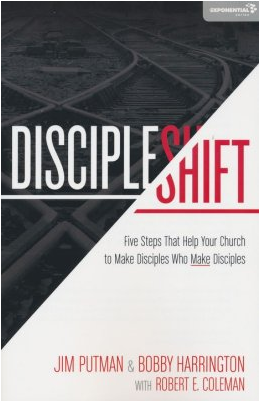
Discipleshift: Jim Putnam, Bobby Harrington, and Robert Coleman

discipleshiftDiscipleshift is a ministry altering book, especially for anyone who is looking to align their ministry with the Great Commission: making disciples who make disciples. This book reminds the reader of the importance of disciple-making as the primary work of the church. Throughout, Putnam gives practical insight  into how make disciples in a local church context. Many other discipleship books stress the importance of discipleship but fail to give an answer to the question of “how do we do this in a local church?” Discipleshift answers that question.

Continue reading “Discipleshift: Jim Putnam, Bobby Harrington, and Robert Coleman”

The Ministry of the Mundane

1748-slide1


Do you ever feel like your days run endlessly together? Wake up, go to work, come home to innumerable chores, go to bed, repeat. Where is the abundant life God promised? Are you missing it? Is it possible to find purpose in the predictable and meaning in the mundane?

I (Jarrett) found this article earlier in the week, and I had to rewrite and repost it, because I think that every believer will be built up and edified through it!

If we are followers of Christ, the answer to the above questions are “yes,” for nothing done in surrendered obedience is ever wasted. At each moment, God uses our mundane, earthly experiences to train and equip us for something greater, to center our thoughts on the eternal, and to be active participants in his outpouring of love and grace. Living God’s great adventure is not a matter of location or vocation, but rather, a continual process of heart and mind transformation.

Continue reading “The Ministry of the Mundane”