Just over a month ago, our family was plunged into the depths of tragedy and grief when my nephew drowned at a friend’s house. Zade, a three year old identical twin, found his way through a locked gate into a swimming pool after everyone left the water. When he was found, CPR efforts revived his heartbeat and he was quickly transported to the hospital, where we all spent a grueling week praying for healing that never came on this side of eternity.
My wife and I kept Zade’s brothers, Zeke and Brighton, at our house that week with our three kids, who also witnessed the accident. During that week, everyone trudged through unimaginable pain while holding onto what small bits of hope we had. Jenna and I tried to hold it together for the kids. It was during this week that God provided me with Granger Smith’s Like A River through the gift of a relative.
Like a River recounts Granger[1] and his family’s story of losing their three year old, River, to drowning. It is an autobiography of Smith’s grief journey and a display of the powerful work of God in his family’s life. The book helped me tremendously. It directed the beginning of my own grief journey as well as equipped me to minister to the rest of my family, including Zade’s parents.
After reading both the audio and print editions and sharing the book with several others, I want to take the time to outline some of what I learned from the book. Aside from the helpful aspects of being able to identify with similar trauma and grief, Like a River taught me specific lessons about pain, loss, and the God who provides all that we need to persevere through them. Here is what I learned.
1. Loss happens to everyone.
When tragedy strikes, it is tempting to believe that you are the only one enduring this kind of pain. Perhaps you know that on a planet of eight billion people some might have experienced what you are experiencing, but it sure doesn’t feel like it.
Like a River reminded me that loss happens to everyone. Our nuanced experience contained several details that made it even more heart-wrenching. But as I read Smith’s story, I was struck by how similar our experiences were. Someone else had walked through what we and our extended family were going through. Someone else had watched every ounce of hope fade away as they spent another day looking at a beautiful, albeit lifeless three-year old body in the hospital room. Someone else watched a three year old save lives through the gift of organ donation. Someone else had a custom-wrapped casket and watched in disbelief as their beloved toddler was lowered into the ground.
As I read Like A River, I was comforted by this fact: we were not alone in our experience of loss. We are never alone in loss. It happens to everyone, in some way, shape, or form. That’s a good thing, because we can learn from and help one another as we deal with it. Smith’s book helped me do just that.
2. Loss is a necessary part of life.
Loss happens to everyone because loss is a necessary part of life. Ever since the fall (Genesis 3), creation’s relationship with its Creator has been broken. Suffering, pain, and loss are the inevitable result of the creation’s fractured relationship with its Creator, God. Such suffering affects Christians and non-Christians alike: our world is broken and needs rescuing.
The good news is that our world has been rescued in Christ. Because of His perfect life, sacrificial death, and resurrection, He has restored us to God and repaired the broken relationship that led to the brokenness all around us, and one day He will restore all things. We call this “living in the already but not yet.” In other words, Christ has already defeated sin and death forever, but He has not yet restored all things. So we still live in a world filled full of suffering, where loss is a necessary part of life.
3. Pain and loss are never meaningless for the Christian.
But just because loss is a necessary part of life in a post-fall world, that doesn’t mean that it is trivial or meaningless. In fact, loss is never meaningless for God’s people. Loss can teach us where and how to find joy and peace in life. Smith illustrates this point by referencing a “purposely strong connection between joy and suffering” in the Bible.[2] Jesus promises suffering, but also invites us to have joy in our suffering. “I have said these things to you, that in me you may have peace. In the world you will have tribulation. But take heart; I have overcome the world” (John 16:33).
Smith writes, “When we are finally redeemed from this broken world and join the ranks in heaven, we will spend the rest of forever, literal eternity, in awe of God for delivering us from all heartache and pain. Living with struggles today gives us another reason to worship God- the One who came to take away the sting of those struggles- because we know they are not the final word. And when we do look to Him, we experience joy. That’s how we’re designed.”[3]
Pain and loss drive us to the only One who can ultimately redeem our suffering. As we look to Him, and look to that day, He strengthens us to find hope in today. Smith’s story embodies this truth. He describes himself as a “dog-tag Christian” who nominally professed Christ. In other words, before River’s death, Smith was a Christian in name only. Naturally, when tragedy struck, he looked to self-help manuals, secular counseling, and substance use to medicate the pain. But he found that none of these things were able to provide lasting peace and hope. Only Christ and His promises could.
Is this too hard to believe- that difficult times can bring about joy in our lives on earth? Smith says no. “Think of your favorite movie,” he says. “Now remove the antagonist. Is it still a good movie? No. If there were no evil, how would we ever see what is good?” Therefore, he argues, “Loss is not only a part of our lives, its also necessary for us to truly understand joy.”[4]
Smith gives two examples from his personal life: the loss of River and the gift of Maverick, the son he and his wife had (miraculously) after they lost River. The loss of River revealed just how precious his life was- how precious all life is, really. But even though his loss was unbearably painful, it also paved the way for unimaginable joy through the gift of his son Maverick.
“The gift of Maverick is just so mind-blowing to me that it overloads my brain just thinking about it. I live in a world now here if I hadn’t lost Riv, then I’d lose Mav, but in order to have Mav, I had to lose Riv.” Maverick stands as a tangible example of one of the many ways that God can bring joy out of pain. Little reminders like this point us toward the redemption of all things, where God will do away with pain and loss forever, wipe every tear from our eyes, and welcome us in to eternal joy. And it will be all the more wonderful given the trials we faced.
Continue reading “Six Things I Learned From Granger Smith’s Like a River “ →


 In Bible and Mission, Richard Bauckham seeks to respond to postmodernism’s rejection of universal metanarratives in favor of particulars by demonstrating that the Bible consistently moves from the particular to the universal, and thus, particulars are the means by which God achieves the universal. In other words, Bauckham wants to show the reader that the Christian faith is not just another universal truth claim that can be dispensed with in favor of particular or diverse expressions of religion, but that the Bible contains a series of God-ordained particulars that open the door to His universal kingdom. By establishing this movement from the particular to the universal in the Bible, Bauckham hopes to provide the reader with the ability to read the Bible in a way that takes seriously its missionary direction by taking both the particular and universal seriously, and achieving the latter via the former (11).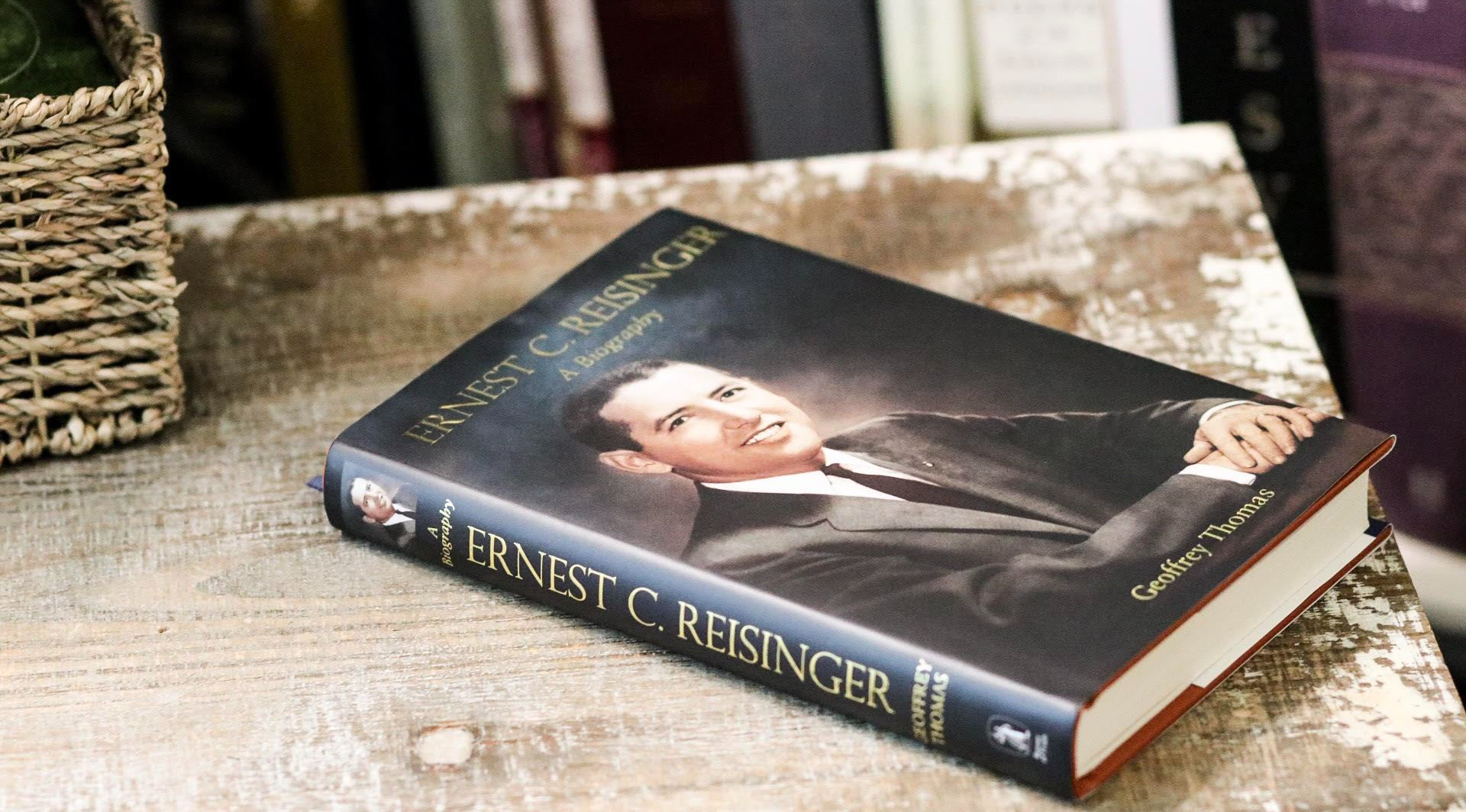

 Before reading Putting on the Armor, I must confess that I often viewed the “armor of God” passage in Ephesians 6 as somewhat irrelevant. In a way, I knew it was probably important, but it seemed to be no more than a descriptive metaphor for walking with God, something I could easily skim over and get the point. I remember hearing a small handful of sermons or talks on the subject that seemed to trivialize the description of the armor. These talks of “praying on the armor” or “which piece of the armor are you missing?” trivialized the concepts of the passage so much that it had a negative effect on how I viewed the relevance of the verses. Dr. Lawless’ book has changed my view on the concept of the “armor” by providing me with an accurate view of the passage as a whole, helping me understand each individual piece of armor, and walking me through how to “wear” the armor in everyday life.
 JARRETT FLETCHER