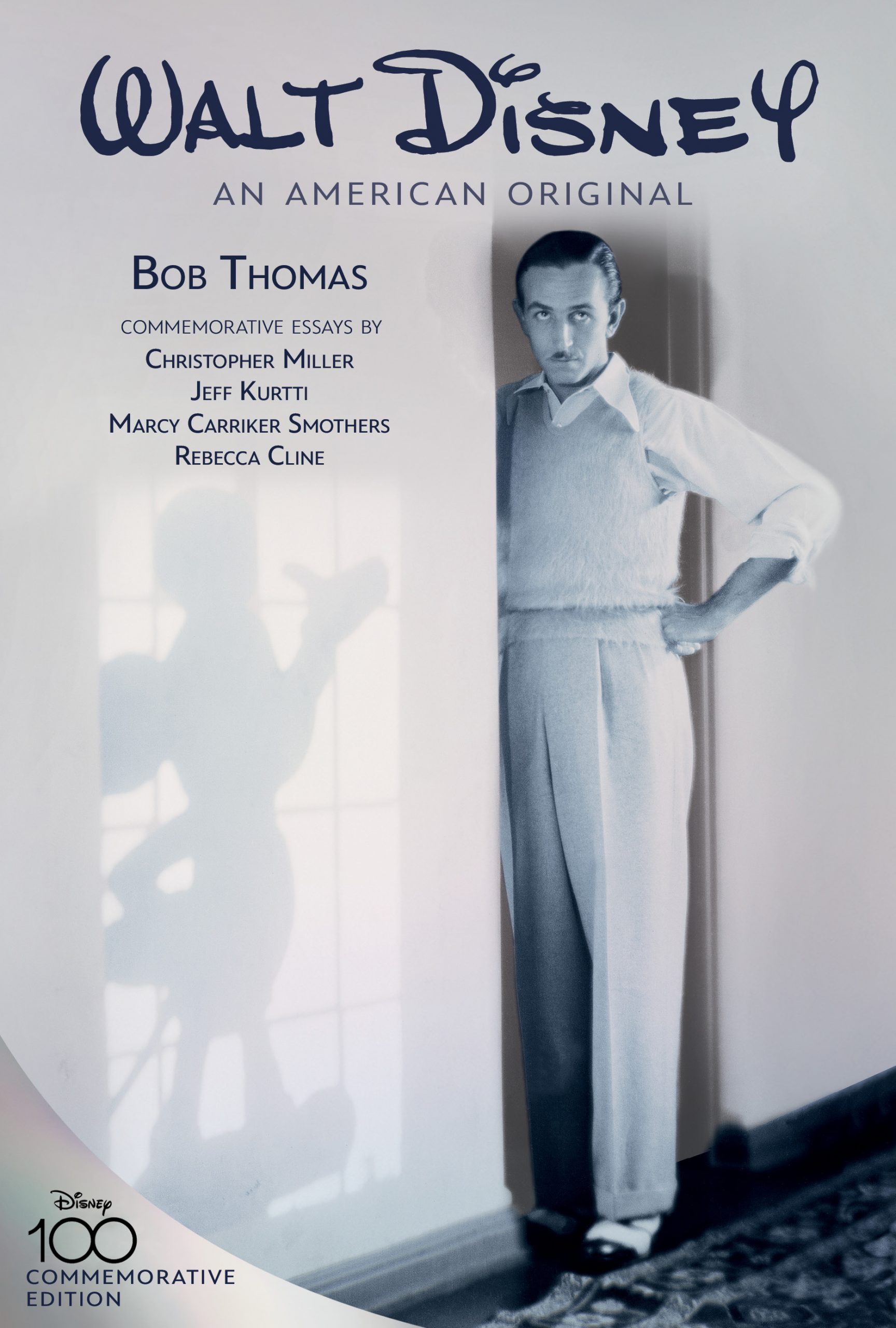
I try to write book reviews on most books that I read. It helps me to process what I’ve read, summarize it succinctly, and either encourage or discourage the reading of the book to others. I finished Bob Thomas’ classic biography of Walt Disney, An American Original, a couple of weeks ago, and I’ve been wrestling with how to write a review of it. But I want to take a stab at it, nonetheless!
The Disney brand can be a polarizing subject today. But it is not my intention to defend or attack the brand. I want to consider the focus of the biography, Walt Disney himself, and specifically what he was after. Walt Disney: An American Original is the gold standard of Disney biographies. Bob Thomas was commissioned by the Disney family and company executives to write the biography and was given access to private documents and records of Walt Disney Studios. Thomas was granted assurance that he could write the story of Walt Disney as he saw it, and that’s exactly what he did.
Walt Disney: An American Original reads as if it was a classic Disney story itself. It features a young boy who was born into a simple family and worked hard to achieve his dreams, dreams that no one else was having at the time. Walt’s story includes working morning and evening as a paper boy, driving ambulances in World War I, struggling to become a successful cartoonist, learning the art of animation and experiencing early success, being betrayed and put on the brink of bankruptcy numerous times, and persevering through every imaginable obstacle to ultimately change the entertainment industry. It’s a riveting read, a story that anyone would enjoy.
Aside from being captivated by contours of Walt’s life, one of the things that struck me the most was Walt’s view of fantasy as entertainment. I think that’s what truly set him apart. Sure, he was always on the cutting edge of technology, always pushing himself and his staff to perfection, and always dreaming of what people wanted before they knew they wanted it. But the thread that connects all of it, from cartoons to motion pictures to theme parks- was Walt’s belief that people needed to escape their world of mundanity and experience something truly fantastical, even if it was just for a little while.
This may be shocking to most, but Walt’s audience was never primarily children. He said so on several occasions. He was, however, intentionally set on drawing out a sense of child-like enjoyment in whatever he did, whether that was from children or adults. “There’s not an adult in every child, but there is a child in every adult” he would say. It’s almost as if he wanted to provide the opportunity for adults to be kids again, particularly in the area of their imagination.
It is interesting to me that Walt’s creations- whether it was cartoons, movies, or the eventual Disney parks, created such child-like enjoyment through telling stories where good overcomes evil (think of Simba defeating Scar), creating places where the effects of sin are minimized (think of how clean a Disney park is!), and providing hope in a happily ever after (almost every Disney fairy tale). Walt’s fantasy was quite different than the materialistic dog-eat-dog, survival-of-the-fittest, the-earth-and-everything-in-it-is-a-pointless-accident world of secular humanism.
But it is not different than the world of Christianity, where good has and will finally conquer evil, where the effects of sin will be done away with forever, and where God’s people will live with Him in perfect peace and happiness forever after. So while Disney was certainly a cutting-edge innovator and once in a lifetime visionary, he wasn’t on to anything new. He was simply tapping into the innate desire of the human heart and transmitting it through compelling stories, beautiful animation, and incredible parks.
Jesus said, “Unless you become like little children, you will never enter the kingdom of heaven” (Matthew 18:3). Walt gave people the opportunity to “become like little children,” in a sense. That’s what made him a once-in-a-lifetime entertainer. And for the Christian, such an experience can certainly complement one’s faith. I personally love riding “It’s a Small World” and entering the final set where the characters from all the different nations are gathered together singing. Yes, it’s a picture of Walt’s vision of world peace. But it’s a picture that cannot and will not happen apart from Christ. The natural world, on its own, produces world wars, not world peace. But because of Christ’s death, burial, and resurrection on behalf of the nations of the world, there will be a day where every tribe, tongue, and nation are gathered together to sing (Revelation 7:9).
So that’s my take on Walt Disney- he was truly on to something, but he didn’t get all the way there. “It’s a Small World,” I think, is a perfect example of that. His life and his legacy, then, are bittersweet for the Christian. Walt gave the world a taste of what Christ actually offers- peace, joy, justice, good-conquering-evil, and the prospect of a bright future with God. He depicted the artistry and goodness of the Creator in his own quest to create parks with beautiful architecture, films with appealing animation, and cartoons that elicited joy and laughter.
I don’t know if Walt knew he was doing those things. But I am convinced that doing them is what made him a success. I just wish he had gone “all the way there,” and that those who love all things Disney would, too.
Walt knew that the human heart was restless, and he wanted to provide entertainment that helped provide much needed rest in a broken and difficult world. He succeeded by providing avenues for people to rest that tapped into the true nature of their restlessness: the need for resting in the goodness and beauty of God. But that rest can only truly be experienced now and in eternity through trusting Christ and finding rest in Him. As Augustine famously said, “Thou hast made us for thyself, O lord, and my heart is restless until it finds its rest in thee.”
I rejoice in Walt’s life inasmuch as he has given me the opportunity to rejoice in Christ and all that He has provided and will provide for me. The movies, parks, and shows can provide glimpses of the goodness and glory of God, but they are just that: glimpses of the immeasurable greatness and glory that is to come for Christ’s people. So I can enjoy the “heaven” scene at the end of “It’s a Small World,” but it will never compare to the glory to be revealed as I join with the nations to sing praises to Jesus at His throne. Nevertheless, I am thankful for the reminder, and for taste of what is to come!
I know that many people may disagree with me here, but I’m simply saying that this is how I am choosing to allow Walt Disney’s legacy to impact me. I’m letting him and his work point me to the One in whom I will truly find my rest, who will truly give me joy, and with whom I will live happily ever after. And because of that, I am thankful for Walt Disney.
 JARRETT FLETCHER